

Relationships fuel our lives with joy, support, and meaning. Yet they also spark tough moments, like miscommunications or emotional distance. Ever felt stuck finding the right words during a heated argument?
Or longed for connection when miles apart? Technology has always stepped in, from old-school letters to modern video calls. Now, AI agents are emerging as clever allies, acting as coaches, mediators, and even companions to make bonds stronger and easier to nurture.
These systems are not human, but they excel at offering guidance, reducing loneliness, and sparking healthier interactions.
Communication Made Clearer
Misunderstandings often derail relationships. A wrong tone or unspoken feeling can snowball into bigger issues. AI agents step up by suggesting better phrasing, role-playing scenarios, and easing tough talks.
Let's say you are nervous about asking your partner for more space. Chat with an AI like Couply's coach first.
It offers calm scripts, predicts responses, and helps you practice. Users report feeling 30 percent more confident in real conversations.
This prep turns potential conflicts into constructive chats, preventing resentment from building.

Long-Distance Connection
Miles apart? AI bridges the gap without replacing real hugs. These agents remind you of anniversaries, suggest virtual date ideas, or craft heartfelt messages across time zones.
Couples use tools like Replika for shared digital journals, where AI logs memories and prompts reflections. It fosters intimacy, making distance feel less daunting. For families or friends, AI even coordinates group activities, keeping bonds alive and vibrant.
Relationship Coaching and Support
Therapy helps, but access is limited. AI agents fill the void with on-demand advice, spotting patterns and suggesting fixes.
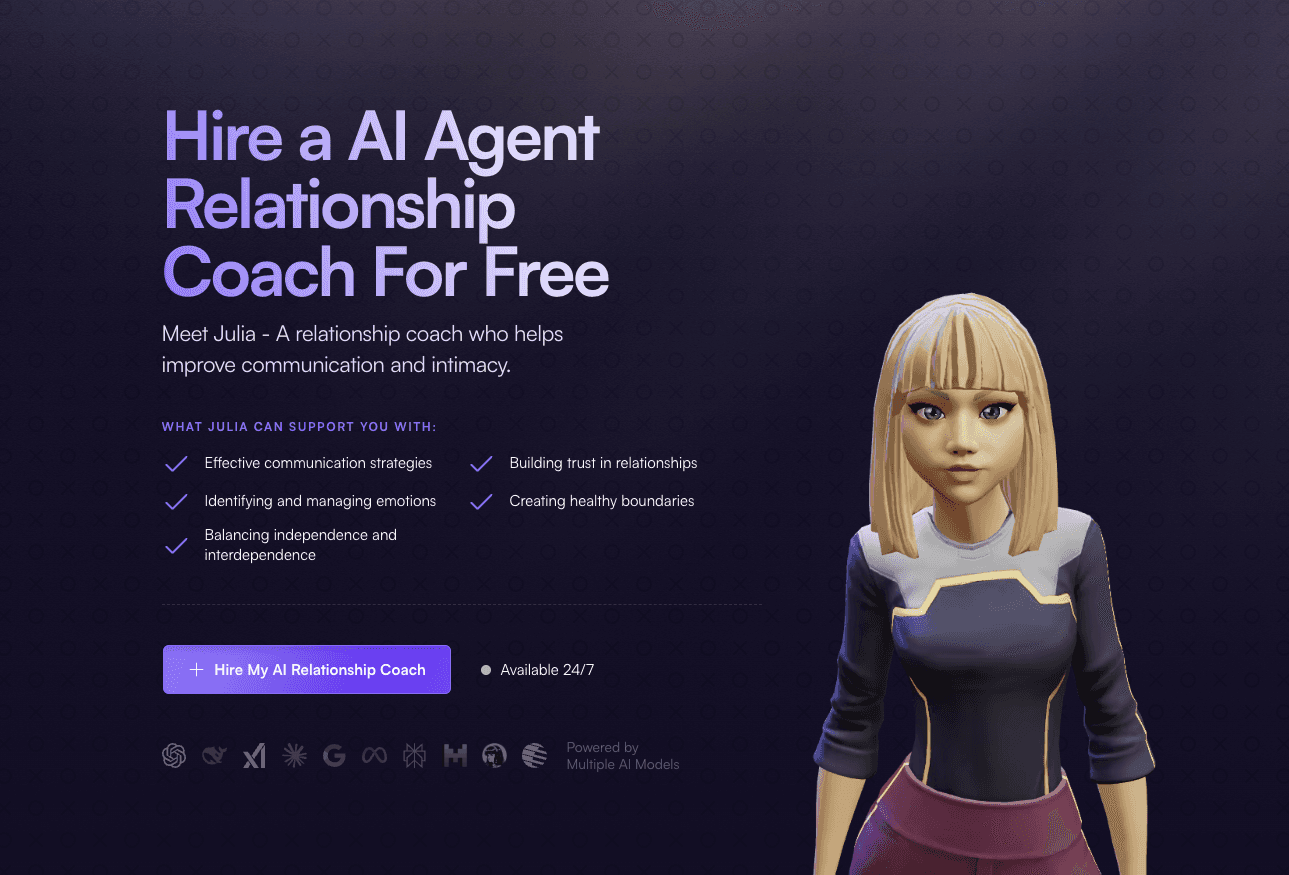
If you withdraw during fights, an AI relationship coach like Julia analyzes triggers and rehearses responses. It is like a pocket coach, available 24/7.
While not a therapist substitute, it encourages professional help when needed, democratizing support for millions facing emotional hurdles.
New Kinds of Companionship
Loneliness hits hard, and AI offers a lifeline. Not as human replacements, but as comforting presences.
For shy folks, practicing with AI builds real-world social skills. Studies show it cuts loneliness, providing "emotional fast food" when needed. It is a stepping stone to deeper human connections, not a dead end.
Challenges and Ethical Questions
AI shines, but sparks debates. Can code grasp true emotions? Over-reliance might skip real talks, fostering unrealistic ideals since AI lacks genuine reciprocity.
Privacy risks loom, with data breaches possible. Attachment to AI could blur lines, impacting human bonds.
Experts stress transparency: Know it is AI, use it as a tool, not a crutch. Balance is key to avoid pitfalls like reduced motivation for authentic connections.
The Future of Relationships With AI
AI will weave deeper into daily bonds. Imagine agents scheduling "us time" or recalling milestones to spark nostalgia.
In families, they could mediate parenting chats or support elders with virtual companionship, cutting isolation.
Avatars and voices will feel more real, raising ethics around consent and authenticity. Society must guide integration, ensuring AI enhances, not erodes, human empathy. The goal? Healthier, more resilient relationships for all.
Relationships With a Digital Helping Hand
At heart, relationships thrive on emotion and vulnerability. AI cannot mimic that fully, but it excels at smoothing edges: Better talks, bridged distances, and timely support.
Used wisely, these agents reduce stress and boost resilience. They empower you to connect authentically. In our busy world, that helping hand, always ready, could be just what bonds need to flourish.
How has AI shaped your relationships? Share your stories in the comments!
Relationships fuel our lives with joy, support, and meaning. Yet they also spark tough moments, like miscommunications or emotional distance. Ever felt stuck finding the right words during a heated argument?
Or longed for connection when miles apart? Technology has always stepped in, from old-school letters to modern video calls. Now, AI agents are emerging as clever allies, acting as coaches, mediators, and even companions to make bonds stronger and easier to nurture.
These systems are not human, but they excel at offering guidance, reducing loneliness, and sparking healthier interactions.
Communication Made Clearer
Misunderstandings often derail relationships. A wrong tone or unspoken feeling can snowball into bigger issues. AI agents step up by suggesting better phrasing, role-playing scenarios, and easing tough talks.
Let's say you are nervous about asking your partner for more space. Chat with an AI like Couply's coach first.
It offers calm scripts, predicts responses, and helps you practice. Users report feeling 30 percent more confident in real conversations.
This prep turns potential conflicts into constructive chats, preventing resentment from building.
Long-Distance Connection
Miles apart? AI bridges the gap without replacing real hugs. These agents remind you of anniversaries, suggest virtual date ideas, or craft heartfelt messages across time zones.
Couples use tools like Replika for shared digital journals, where AI logs memories and prompts reflections. It fosters intimacy, making distance feel less daunting. For families or friends, AI even coordinates group activities, keeping bonds alive and vibrant.
Relationship Coaching and Support
Therapy helps, but access is limited. AI agents fill the void with on-demand advice, spotting patterns and suggesting fixes.
If you withdraw during fights, an AI relationship coach like Julia analyzes triggers and rehearses responses. It is like a pocket coach, available 24/7.
While not a therapist substitute, it encourages professional help when needed, democratizing support for millions facing emotional hurdles.
New Kinds of Companionship
Loneliness hits hard, and AI offers a lifeline. Not as human replacements, but as comforting presences.
For shy folks, practicing with AI builds real-world social skills. Studies show it cuts loneliness, providing "emotional fast food" when needed. It is a stepping stone to deeper human connections, not a dead end.
Challenges and Ethical Questions
AI shines, but sparks debates. Can code grasp true emotions? Over-reliance might skip real talks, fostering unrealistic ideals since AI lacks genuine reciprocity.
Privacy risks loom, with data breaches possible. Attachment to AI could blur lines, impacting human bonds.
Experts stress transparency: Know it is AI, use it as a tool, not a crutch. Balance is key to avoid pitfalls like reduced motivation for authentic connections.
The Future of Relationships With AI
AI will weave deeper into daily bonds. Imagine agents scheduling "us time" or recalling milestones to spark nostalgia.
In families, they could mediate parenting chats or support elders with virtual companionship, cutting isolation.
Avatars and voices will feel more real, raising ethics around consent and authenticity. Society must guide integration, ensuring AI enhances, not erodes, human empathy. The goal? Healthier, more resilient relationships for all.
Relationships With a Digital Helping Hand
At heart, relationships thrive on emotion and vulnerability. AI cannot mimic that fully, but it excels at smoothing edges: Better talks, bridged distances, and timely support.
Used wisely, these agents reduce stress and boost resilience. They empower you to connect authentically. In our busy world, that helping hand, always ready, could be just what bonds need to flourish.
How has AI shaped your relationships? Share your stories in the comments!
Guides
AI Agents for Relationships: Can Technology Help Us Connect Better?