

With around 79 percent of law firms now integrating AI tools into their workflows, and 85 percent of lawyers using generative AI daily or weekly, the legal profession stands at a thrilling tipping point.
The sheer volume of information has exploded, with statutes, precedents, and regulations multiplying faster than ever. Keeping up feels like chasing a runaway train, even for big firms with dedicated teams.
This is where AI agents come in, acting like super-smart sidekicks that plan, execute tasks, and adapt on their own.
Research at Unprecedented Speed
Legal research used to eat up hours, sifting through endless case law and rulings. Now, AI flips the script by scanning and synthesizing info in seconds.
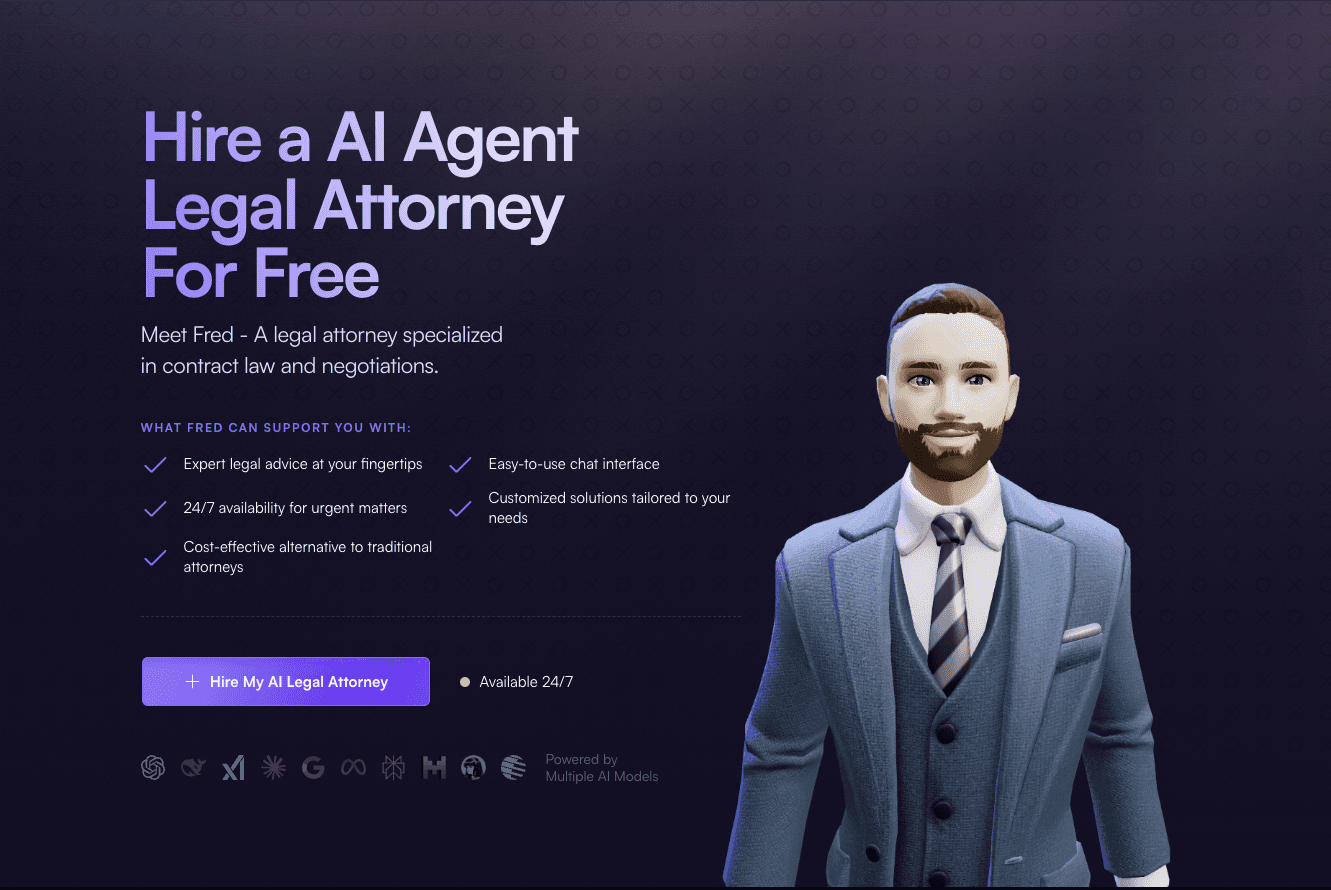
Agent.so has AI Agents in the legal field lined up to assist in seconds: Fred, an AI attorney; Kennedy, an AI legal counsel and Isabella, an AI paralegal.
Ask them to summarize key precedents on a contract dispute, highlight conflicts, or compare rulings across states - it delivers a structured overview instantly. They can also create research plans, pull from databases, and draft memos with cited sources.
Lawyers report slashing research time by up to 80 percent. It is a massive head start, ensuring no critical case slips through the cracks, while you focus on the big-picture strategy.
Drafting and Reviewing Documents
Contracts and filings follow patterns, but tiny tweaks can spell big trouble. AI agents shine at generating first drafts from templates or spotting red flags in reviews, like unusual clauses or compliance gaps.
For instance, a merger lawyer might use AI to flag deviations from industry norms in an agreement. A real estate pro could tailor a lease and refine it later.
These agents accelerate the grind, but you stay in the driver's seat for final tweaks.
Enhancing Access to Justice
What if AI could level the playing field for those priced out of legal help? In 2025, it is happening.
Initiatives like Stanford's AI & Access to Justice program use AI for user-friendly tools that explain rights, draft basic docs, or guide folks to resources. Tools like DoNotPay handle small claims, while global efforts, such as Croatia's ANON for anonymizing court docs, make systems more inclusive.
This bridges gaps for individuals and small businesses facing disputes or compliance woes. It is not a lawyer replacement, but a first step toward fairer justice for all.
Supporting Courtroom Preparation
Litigation thrives on sharp strategy. AI agents amp this up by simulating scenarios - acting as opposing counsel or judges to test arguments and expose weak spots.
Feed your case details into something like Lex Machina for outcome predictions, or chat with Judge Judy to role-play prosecutions.
Lawyers save up to 32.5 days a year on prep, gaining confidence before trial. It is like a dress rehearsal that sharpens your edge.

Administrative Relief for Legal Professionals
Admin tasks bog down lawyers - think scheduling, emails, and file organization. AI agents handle these like pros, managing calendars, sending reminders, and keeping records tidy.
Firms see client satisfaction jump by over 40 percent with automated comms. This frees you for what matters: negotiating, advocating, and building client bonds. In competitive practices, it is a game-changer.
Challenges and Ethical Considerations
AI brings excitement, but hurdles too. Hallucinations - where AI invents fake cases - have hit over 120 incidents since 2023, with 58 in 2025 alone. Blind trust can lead to sanctions, so verification is key.
Privacy demands secure systems for sensitive data. In Virginia, ethics opinions like LEO 1901 guide reasonable fees with AI, pushing value-based billing over hourly.
Fairness matters: If big firms dominate advanced tools, smaller ones lag. Regulations are evolving to ensure equity.
The Future of Legal AI Agents
By 2029, expect deeper integration - real-time analysis in hearings or AI triaging court filings.
Public tools might guide citizens on taxes or permits. With legal AI funding soaring - think $17.4 billion in applied AI for Q3 2025 - growth is explosive.
Humans remain irreplaceable for empathy and advocacy, but AI partners will make law smarter and more inclusive.
A Smarter Legal System With AI
Law demands detail, diligence, and heart. AI agents enhance these, from research to client service, without changing the core. Clients get quicker, cheaper help; lawyers focus on impact; society gains a fairer system.
Disclaimer: While the AI strives for accuracy and helpfulness, it may not always reflect the most current or complete information. The content produced should not be considered professional advice. For serious, sensitive, or high-stakes matters, always consult a qualified professional or trusted expert.
With around 79 percent of law firms now integrating AI tools into their workflows, and 85 percent of lawyers using generative AI daily or weekly, the legal profession stands at a thrilling tipping point.
The sheer volume of information has exploded, with statutes, precedents, and regulations multiplying faster than ever. Keeping up feels like chasing a runaway train, even for big firms with dedicated teams.
This is where AI agents come in, acting like super-smart sidekicks that plan, execute tasks, and adapt on their own.
Research at Unprecedented Speed
Legal research used to eat up hours, sifting through endless case law and rulings. Now, AI flips the script by scanning and synthesizing info in seconds.
Agent.so has AI Agents in the legal field lined up to assist in seconds: Fred, an AI attorney; Kennedy, an AI legal counsel and Isabella, an AI paralegal.
Ask them to summarize key precedents on a contract dispute, highlight conflicts, or compare rulings across states - it delivers a structured overview instantly. They can also create research plans, pull from databases, and draft memos with cited sources.
Lawyers report slashing research time by up to 80 percent. It is a massive head start, ensuring no critical case slips through the cracks, while you focus on the big-picture strategy.
Drafting and Reviewing Documents
Contracts and filings follow patterns, but tiny tweaks can spell big trouble. AI agents shine at generating first drafts from templates or spotting red flags in reviews, like unusual clauses or compliance gaps.
For instance, a merger lawyer might use AI to flag deviations from industry norms in an agreement. A real estate pro could tailor a lease and refine it later.
These agents accelerate the grind, but you stay in the driver's seat for final tweaks.
Enhancing Access to Justice
What if AI could level the playing field for those priced out of legal help? In 2025, it is happening.
Initiatives like Stanford's AI & Access to Justice program use AI for user-friendly tools that explain rights, draft basic docs, or guide folks to resources. Tools like DoNotPay handle small claims, while global efforts, such as Croatia's ANON for anonymizing court docs, make systems more inclusive.
This bridges gaps for individuals and small businesses facing disputes or compliance woes. It is not a lawyer replacement, but a first step toward fairer justice for all.
Supporting Courtroom Preparation
Litigation thrives on sharp strategy. AI agents amp this up by simulating scenarios - acting as opposing counsel or judges to test arguments and expose weak spots.
Feed your case details into something like Lex Machina for outcome predictions, or chat with Judge Judy to role-play prosecutions.
Lawyers save up to 32.5 days a year on prep, gaining confidence before trial. It is like a dress rehearsal that sharpens your edge.
Administrative Relief for Legal Professionals
Admin tasks bog down lawyers - think scheduling, emails, and file organization. AI agents handle these like pros, managing calendars, sending reminders, and keeping records tidy.
Firms see client satisfaction jump by over 40 percent with automated comms. This frees you for what matters: negotiating, advocating, and building client bonds. In competitive practices, it is a game-changer.
Challenges and Ethical Considerations
AI brings excitement, but hurdles too. Hallucinations - where AI invents fake cases - have hit over 120 incidents since 2023, with 58 in 2025 alone. Blind trust can lead to sanctions, so verification is key.
Privacy demands secure systems for sensitive data. In Virginia, ethics opinions like LEO 1901 guide reasonable fees with AI, pushing value-based billing over hourly.
Fairness matters: If big firms dominate advanced tools, smaller ones lag. Regulations are evolving to ensure equity.
The Future of Legal AI Agents
By 2029, expect deeper integration - real-time analysis in hearings or AI triaging court filings.
Public tools might guide citizens on taxes or permits. With legal AI funding soaring - think $17.4 billion in applied AI for Q3 2025 - growth is explosive.
Humans remain irreplaceable for empathy and advocacy, but AI partners will make law smarter and more inclusive.
A Smarter Legal System With AI
Law demands detail, diligence, and heart. AI agents enhance these, from research to client service, without changing the core. Clients get quicker, cheaper help; lawyers focus on impact; society gains a fairer system.
Disclaimer: While the AI strives for accuracy and helpfulness, it may not always reflect the most current or complete information. The content produced should not be considered professional advice. For serious, sensitive, or high-stakes matters, always consult a qualified professional or trusted expert.
Guides
The Rise of Legal AI Agents