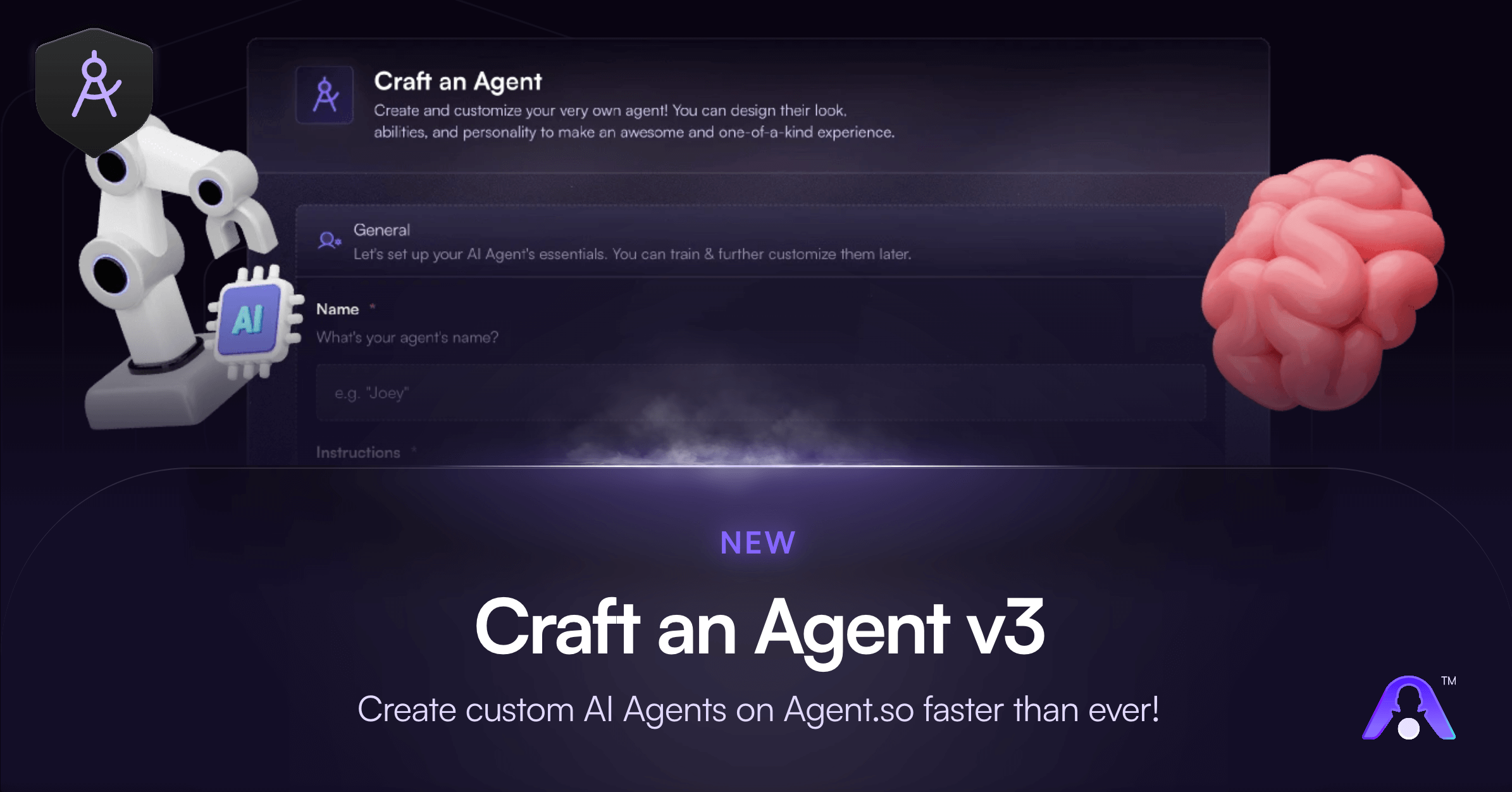


Artificial intelligence is entering a new stage of adoption.
For the past few years, most businesses have interacted with AI through prompts. Teams asked AI tools to write content, summarize documents, or generate ideas. While useful, these interactions rarely became part of operational infrastructure.
A new model is now emerging around AI agent marketplaces.
Instead of using AI occasionally, companies are beginning to deploy specialized AI agents that operate continuously inside real workflows. These agents analyze business data, monitor systems, surface insights, and support decision-making across marketing, operations, research, and customer success.
Rather than a single assistant, organizations are building deployable AI workforces composed of multiple AI agents working together.
Understanding how AI agent marketplaces work is becoming an important advantage for founders, operators, and teams exploring AI automation.
What Is an AI Agent Marketplace?
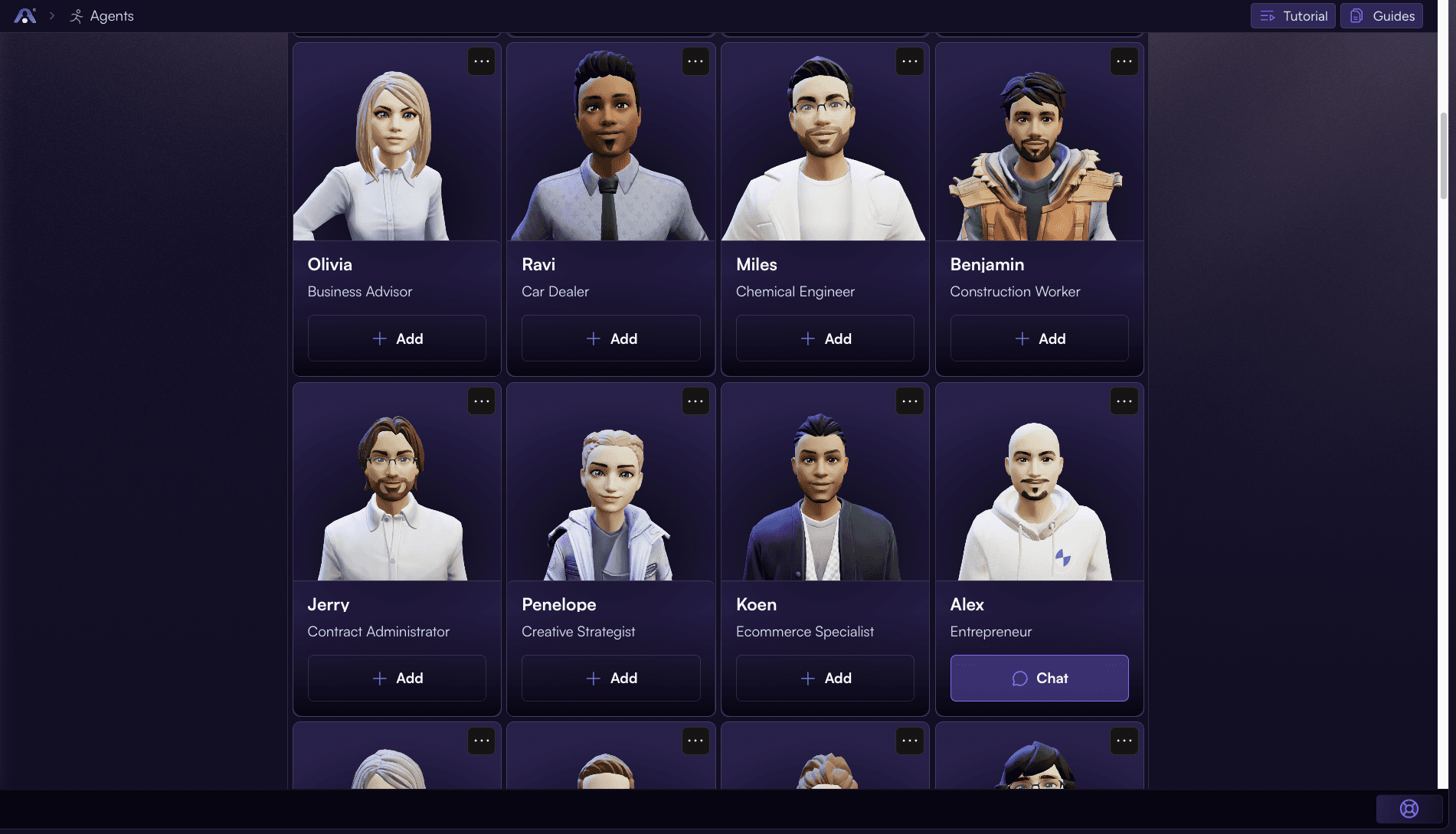
An AI agent marketplace is a platform where businesses can discover, deploy, and customize specialized AI agents designed for specific tasks.
Instead of building complex AI automation systems from scratch, companies can select agents built for particular functions and integrate them into existing workflows.
These agents might include:
Marketing analysis agents
Customer support insight agents
Research agents
Decision-support agents
Each agent is designed to analyze a specific type of data and generate insights relevant to that domain.
The key idea behind AI agent marketplaces is deployability. Rather than writing prompts repeatedly, teams deploy agents that continuously analyze data and produce insights over time.
This shift transforms AI from a productivity tool into a business intelligence layer embedded inside everyday operations.
Why AI Agent Marketplaces Are Growing Quickly
Several trends are pushing companies toward this model.
Early AI adoption focused on productivity gains. Teams used AI tools for quick outputs such as writing drafts or summarizing notes.
But those outputs often remained isolated.
Companies now want AI that works inside operational systems, not outside them. AI agent marketplaces allow organizations to deploy agents that continuously analyze workflows rather than responding to one-off prompts.
AI Systems Are Becoming Modular
Modern software infrastructure relies heavily on APIs, integrations, and modular tools. This environment makes it easier for AI agents to interact with multiple systems.
A marketing analytics agent might analyze campaign data exported from Google Analytics or ad platforms. A customer success agent might review CRM or support ticket data.
Because business data is increasingly portable, AI agents can operate as modular intelligence components across systems.
Businesses Need Specialized Intelligence
Generic AI assistants can perform many tasks, but businesses require deeper domain insight.
A customer success agent needs to understand churn signals. A marketing analysis agent needs to interpret campaign metrics. A research agent must synthesize industry reports.
AI agent marketplaces allow companies to deploy specialized AI agents tailored to particular business problems.
How Businesses Use AI Agent Marketplaces in Practice
The most effective way to understand AI agent marketplaces is through real workflows.
Instead of trying to automate everything, companies usually begin with one operational question that generates recurring data.
Customer Support Insight Agents
Customer support teams generate large volumes of ticket data. However, most companies never analyze this information systematically.
A support analysis agent can review ticket exports and identify patterns such as:
Rising complaint categories
Recurring product confusion
Support requests linked to churn risk
These insights help companies improve product documentation, onboarding, and messaging.
For example, this approach aligns closely with strategies discussed in our guide on AI agents for customer support and client success, where support data becomes a powerful source of retention intelligence.
Marketing Performance Analysis Agents
Marketing teams constantly review campaign metrics across multiple platforms. However, interpreting these dashboards manually takes time.
A marketing analysis agent can review campaign performance data and identify trends such as:
Campaigns producing the highest customer lifetime value
Traffic sources with declining conversion rates
Messaging changes impacting engagement
These insights help teams refine strategy faster.
Research and Market Intelligence Agents
Many companies rely on research reports, competitor analysis, and industry data to inform strategic decisions.
Research agents can scan documents, summarize insights, and highlight emerging patterns in market data. This allows leadership teams to process large amounts of information quickly.
Building Your First AI Agent Workflow
Adopting AI agent marketplaces works best when businesses start with a focused workflow.
The first step is identifying a process that produces structured data and requires regular analysis. Support tickets, CRM pipelines, marketing analytics, and revenue reports are common starting points.
Once the data source is identified, teams can deploy an AI agent designed to analyze that dataset.
For example, if the goal is improving customer retention, a company might export support ticket history and ask the AI agent to analyze recurring issues and churn signals.
If the goal is marketing optimization, campaign analytics exports can be analyzed to identify high-performing audience segments.
The key principle is simple: AI agents perform best when they analyze structured business data rather than unstructured prompts.
After the first workflow stabilizes, companies can gradually deploy additional agents in adjacent areas.

Creating a Deployable AI Workforce
As organizations gain experience with AI agent marketplaces, they often expand from single-agent workflows into multi-agent systems.
Instead of relying on one AI assistant, companies deploy agents aligned with specific roles.
For example, a SaaS company might structure its AI workforce around several specialized agents:
A customer success agent monitoring churn indicators
A marketing intelligence agent reviewing campaign performance
A research agent tracking industry developments
An operations agent summarizing weekly metrics
Each agent contributes insights from a different perspective.
Over time, these agents create a distributed intelligence layer across the company.
This concept is closely related to the emerging idea of AI agent orchestration, where multiple agents collaborate across workflows to produce coordinated insights.
Avoiding Common Mistakes With AI Agent Marketplaces
While AI agent marketplaces make deployment easier, successful adoption still requires thoughtful implementation.
One common mistake is deploying agents without a clear operational objective. AI agents should exist to answer specific questions or improve measurable workflows.
Another mistake is trying to deploy too many agents at once. Organizations achieve better results by stabilizing one workflow before expanding to others.
Finally, companies sometimes overlook data quality. AI agents produce stronger insights when they receive structured and consistent datasets. Clean exports from CRM systems, analytics dashboards, and support platforms significantly improve results.
AI adoption works best when it evolves gradually.
Why AI Agent Marketplaces Will Shape the Future of Work
The rise of AI agent marketplaces suggests a major shift in how organizations structure intelligence systems.
Instead of relying on scattered dashboards and manual analysis, companies will increasingly deploy AI agents that continuously interpret operational data.
This shift does not replace human decision-making. It strengthens it.
Executives gain clearer visibility into performance trends. Teams spend less time gathering data and more time interpreting insights. Strategic discussions become grounded in synthesized analysis rather than fragmented reports.
In competitive markets, the ability to observe patterns earlier and respond faster becomes a major advantage.
Organizations that deploy AI agents strategically will operate with greater awareness and agility.

Deploy AI Agents With Agent.so
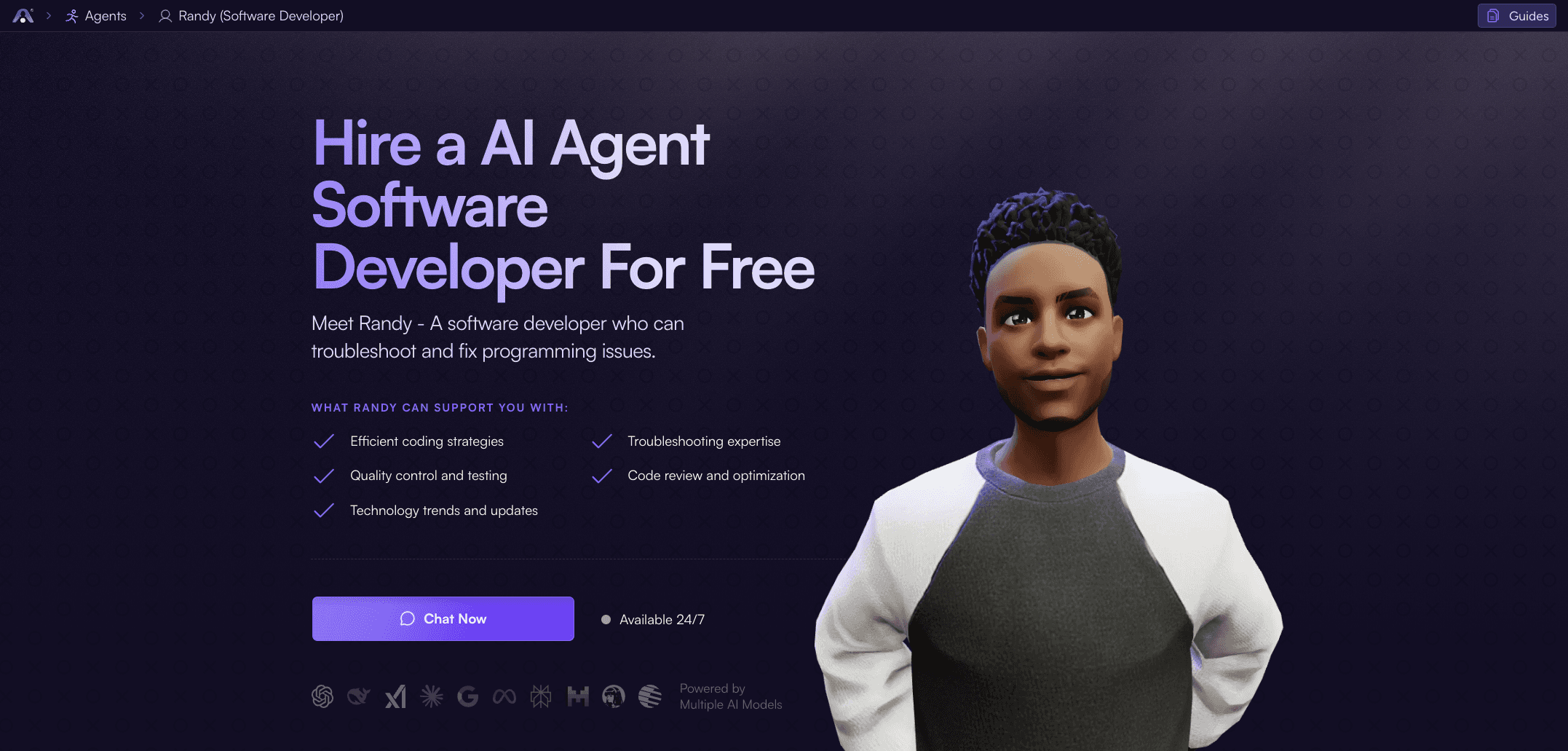
Instead of relying on scattered prompts across multiple tools, businesses can create specialized AI agents with Agent.so focused on research, marketing analysis, customer success insights, and operational reporting.
By exporting structured business data and feeding it into these agents, organizations can build a distributed intelligence system across their operations.
The result is not just automation. It is a deployable AI workforce that continuously analyzes information and supports better decision-making.
Explore how to create your first AI agents at Agent.so and start building the intelligence layer that will power the next generation of businesses.
Artificial intelligence is entering a new stage of adoption.
For the past few years, most businesses have interacted with AI through prompts. Teams asked AI tools to write content, summarize documents, or generate ideas. While useful, these interactions rarely became part of operational infrastructure.
A new model is now emerging around AI agent marketplaces.
Instead of using AI occasionally, companies are beginning to deploy specialized AI agents that operate continuously inside real workflows. These agents analyze business data, monitor systems, surface insights, and support decision-making across marketing, operations, research, and customer success.
Rather than a single assistant, organizations are building deployable AI workforces composed of multiple AI agents working together.
Understanding how AI agent marketplaces work is becoming an important advantage for founders, operators, and teams exploring AI automation.
What Is an AI Agent Marketplace?
An AI agent marketplace is a platform where businesses can discover, deploy, and customize specialized AI agents designed for specific tasks.
Instead of building complex AI automation systems from scratch, companies can select agents built for particular functions and integrate them into existing workflows.
These agents might include:
Marketing analysis agents
Customer support insight agents
Research agents
Decision-support agents
Each agent is designed to analyze a specific type of data and generate insights relevant to that domain.
The key idea behind AI agent marketplaces is deployability. Rather than writing prompts repeatedly, teams deploy agents that continuously analyze data and produce insights over time.
This shift transforms AI from a productivity tool into a business intelligence layer embedded inside everyday operations.
Why AI Agent Marketplaces Are Growing Quickly
Several trends are pushing companies toward this model.
Early AI adoption focused on productivity gains. Teams used AI tools for quick outputs such as writing drafts or summarizing notes.
But those outputs often remained isolated.
Companies now want AI that works inside operational systems, not outside them. AI agent marketplaces allow organizations to deploy agents that continuously analyze workflows rather than responding to one-off prompts.
AI Systems Are Becoming Modular
Modern software infrastructure relies heavily on APIs, integrations, and modular tools. This environment makes it easier for AI agents to interact with multiple systems.
A marketing analytics agent might analyze campaign data exported from Google Analytics or ad platforms. A customer success agent might review CRM or support ticket data.
Because business data is increasingly portable, AI agents can operate as modular intelligence components across systems.
Businesses Need Specialized Intelligence
Generic AI assistants can perform many tasks, but businesses require deeper domain insight.
A customer success agent needs to understand churn signals. A marketing analysis agent needs to interpret campaign metrics. A research agent must synthesize industry reports.
AI agent marketplaces allow companies to deploy specialized AI agents tailored to particular business problems.
How Businesses Use AI Agent Marketplaces in Practice
The most effective way to understand AI agent marketplaces is through real workflows.
Instead of trying to automate everything, companies usually begin with one operational question that generates recurring data.
Customer Support Insight Agents
Customer support teams generate large volumes of ticket data. However, most companies never analyze this information systematically.
A support analysis agent can review ticket exports and identify patterns such as:
Rising complaint categories
Recurring product confusion
Support requests linked to churn risk
These insights help companies improve product documentation, onboarding, and messaging.
For example, this approach aligns closely with strategies discussed in our guide on AI agents for customer support and client success, where support data becomes a powerful source of retention intelligence.
Marketing Performance Analysis Agents
Marketing teams constantly review campaign metrics across multiple platforms. However, interpreting these dashboards manually takes time.
A marketing analysis agent can review campaign performance data and identify trends such as:
Campaigns producing the highest customer lifetime value
Traffic sources with declining conversion rates
Messaging changes impacting engagement
These insights help teams refine strategy faster.
Research and Market Intelligence Agents
Many companies rely on research reports, competitor analysis, and industry data to inform strategic decisions.
Research agents can scan documents, summarize insights, and highlight emerging patterns in market data. This allows leadership teams to process large amounts of information quickly.
Building Your First AI Agent Workflow
Adopting AI agent marketplaces works best when businesses start with a focused workflow.
The first step is identifying a process that produces structured data and requires regular analysis. Support tickets, CRM pipelines, marketing analytics, and revenue reports are common starting points.
Once the data source is identified, teams can deploy an AI agent designed to analyze that dataset.
For example, if the goal is improving customer retention, a company might export support ticket history and ask the AI agent to analyze recurring issues and churn signals.
If the goal is marketing optimization, campaign analytics exports can be analyzed to identify high-performing audience segments.
The key principle is simple: AI agents perform best when they analyze structured business data rather than unstructured prompts.
After the first workflow stabilizes, companies can gradually deploy additional agents in adjacent areas.
Creating a Deployable AI Workforce
As organizations gain experience with AI agent marketplaces, they often expand from single-agent workflows into multi-agent systems.
Instead of relying on one AI assistant, companies deploy agents aligned with specific roles.
For example, a SaaS company might structure its AI workforce around several specialized agents:
A customer success agent monitoring churn indicators
A marketing intelligence agent reviewing campaign performance
A research agent tracking industry developments
An operations agent summarizing weekly metrics
Each agent contributes insights from a different perspective.
Over time, these agents create a distributed intelligence layer across the company.
This concept is closely related to the emerging idea of AI agent orchestration, where multiple agents collaborate across workflows to produce coordinated insights.
Avoiding Common Mistakes With AI Agent Marketplaces
While AI agent marketplaces make deployment easier, successful adoption still requires thoughtful implementation.
One common mistake is deploying agents without a clear operational objective. AI agents should exist to answer specific questions or improve measurable workflows.
Another mistake is trying to deploy too many agents at once. Organizations achieve better results by stabilizing one workflow before expanding to others.
Finally, companies sometimes overlook data quality. AI agents produce stronger insights when they receive structured and consistent datasets. Clean exports from CRM systems, analytics dashboards, and support platforms significantly improve results.
AI adoption works best when it evolves gradually.
Why AI Agent Marketplaces Will Shape the Future of Work
The rise of AI agent marketplaces suggests a major shift in how organizations structure intelligence systems.
Instead of relying on scattered dashboards and manual analysis, companies will increasingly deploy AI agents that continuously interpret operational data.
This shift does not replace human decision-making. It strengthens it.
Executives gain clearer visibility into performance trends. Teams spend less time gathering data and more time interpreting insights. Strategic discussions become grounded in synthesized analysis rather than fragmented reports.
In competitive markets, the ability to observe patterns earlier and respond faster becomes a major advantage.
Organizations that deploy AI agents strategically will operate with greater awareness and agility.
Deploy AI Agents With Agent.so
Instead of relying on scattered prompts across multiple tools, businesses can create specialized AI agents with Agent.so focused on research, marketing analysis, customer success insights, and operational reporting.
By exporting structured business data and feeding it into these agents, organizations can build a distributed intelligence system across their operations.
The result is not just automation. It is a deployable AI workforce that continuously analyzes information and supports better decision-making.
Explore how to create your first AI agents at Agent.so and start building the intelligence layer that will power the next generation of businesses.
Guide
AI Agent Marketplaces Explained: The Rise of Deployable AI Workforces