

Multi-agent systems are one of the biggest trends in AI right now.
The concept is simple: instead of using one AI agent to handle a task, you split the work across several agents with different roles.
One plans, one researches, one writes, one reviews, and another may coordinate the whole process. It sounds smart, and sometimes it is. But in real products, many multi-agent systems are overbuilt.
They often create more complexity than value. Costs go up. Latency increases. Debugging gets harder. And the final output is not always better than what a simpler setup could have produced.
For teams building AI agents, the real challenge is not creating more moving parts. It is building systems that are reliable, understandable, and worth running in production.
What Are Multi-Agent Systems in AI?
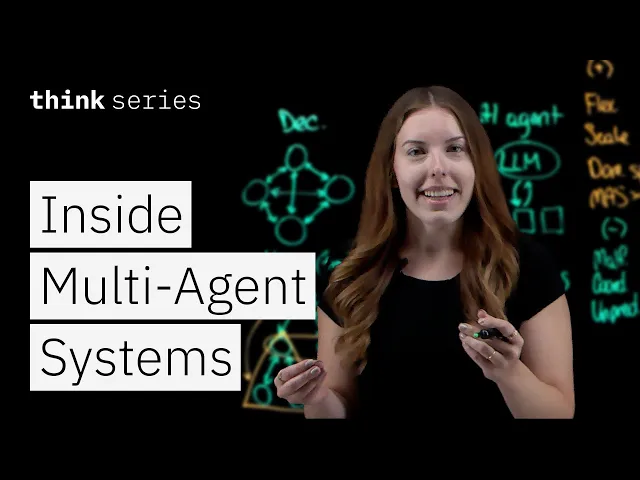
Multi-agent systems are AI workflows where multiple agents work together to complete a task. Each agent is usually given a separate responsibility, such as planning, information gathering, tool use, decision-making, or quality control.
In theory, this mirrors how human teams operate. Specialized roles can improve efficiency and quality when the work is truly divided in a useful way.
That is why multi-agent AI is getting so much attention. It feels like a natural next step for agent architecture. Instead of one general-purpose system doing everything, you get a structured workflow made up of smaller, narrower agents.
The idea is compelling, but compelling ideas do not always create better products.
Why Multi-Agent Systems Became So Popular
A big reason multi-agent systems took off is that they make demos look more impressive. A workflow with a planner, researcher, and reviewer feels more advanced than a single agent responding to instructions.
There is also a strong intuitive appeal. Humans divide work by specialization, so it seems logical that AI agents should do the same. If one agent can do a task reasonably well, then several specialized agents should do it even better.
Sometimes that is true. But many teams adopt multi-agent design too early. They build around the appearance of sophistication before proving that the extra layers improve results.
That usually leads to overengineering.
The Hidden Cost of Multi-Agent Systems
Every additional agent introduces overhead.
There is another prompt to maintain, another context window to manage, another step in the workflow, and another place where something can go wrong.
Even if each individual agent performs reasonably well, the full system can still become fragile.
This matters for three reasons.
First, latency increases because more steps are involved.
Second, cost rises because more model calls are being made.
Third, reliability often drops because each handoff creates a new opportunity for confusion.
That tradeoff is easy to ignore in prototype mode. It becomes much harder to ignore when you are trying to deploy AI agents in a real product or customer workflow.
This is where teams often learn that complexity does not scale as gracefully as they expected.
How Context Gets Lost in Multi-Agent Workflows
One of the biggest weaknesses in multi-agent systems is context fragmentation.
A single agent with the right tools can often maintain continuity from start to finish. It sees the full request, understands the constraints, and keeps track of what has already happened.
In a multi-agent workflow, that continuity gets broken up. One agent summarizes for another. Another compresses that summary.
A third acts on a shortened version of the original task. By the time the work is completed, important details may have been softened, distorted, or dropped entirely.
This is especially risky in tasks where nuance matters. Sales outreach, customer support, recruiting, research, and long-form writing all depend on subtle context. Small losses in handoff quality can lead to weak outcomes.
That is one reason why multi-agent AI often sounds stronger than it performs. Specialization helps only if the system can preserve meaning across each step.

Why Single-Agent Workflows Often Perform Better
Single-agent workflows are often underestimated.
A well-designed single agent with access to the right tools, a clear task definition, and a sensible review step can outperform a more complex multi-agent system. Not because it is more advanced, but because it is simpler to operate.
Simple systems are easier to test, easier to monitor, and easier to improve. When something breaks, you can usually identify the issue faster. When results are inconsistent, you know where to start making changes.
That is a major advantage for teams trying to build dependable AI agent products. A clean single-agent workflow often delivers better practical performance than a network of loosely coordinated agents.
For many use cases, especially early on, simpler architecture wins because it removes unnecessary failure points.
When Multi-Agent Systems Actually Make Sense
This does not mean multi-agent systems are a bad idea in every case.
They can work very well when the work is clearly separable. For example, if several tasks can run in parallel, using multiple agents may reduce time and improve structure.
If different actions require different permissions or tool access, separating agents can also improve control and security.
Long-running workflows may benefit from dividing the process into stages that different agents or workers handle over time.
The key is clarity.
Each agent should exist for a measurable reason. There should be a specific benefit tied to that separation, whether it is speed, safety, accuracy, or operational control.
If a second or third agent does not create a clear improvement, it is probably just adding weight.
How to Choose the Right AI Agent Architecture
A good rule is to start with one agent and only add more when the data tells you to.
Build the simplest workflow that can complete the task. Observe where it fails. Then ask whether another agent actually solves that problem, or whether better prompting, better tooling, or better guardrails would be enough.
This approach keeps architecture grounded in evidence instead of hype.
For teams exploring workflows on Agent.so or building internally, this is usually the most practical path. Reliable agent systems are not defined by how many roles they include.
They are defined by whether they can complete useful work consistently and efficiently.
If the simplest version already works well, that is not a weakness. It is good system design.

Why Simpler AI Agent Systems Often Win
The strongest AI agent systems usually optimize for clarity, not complexity.
They are easier to explain, easier to trust, and easier to improve over time. That matters far more than having a workflow that looks sophisticated in a diagram.
Businesses want agent systems that can produce repeatable outcomes, stay within cost limits, and behave predictably. Users want systems that feel reliable.
Teams want workflows they can debug without spending days tracing a chain of brittle handoffs.
This is why simpler AI agent systems often win in production. They leave less room for failure and more room for iteration.
In many cases, the competitive advantage is not having more agents. It is having fewer, better ones.
Final Thoughts on Multi-Agent Systems
Most multi-agent systems are overengineered because they are designed around the idea of specialization before teams have proved they actually need it.
That creates more prompts, more coordination overhead, more latency, and more ways for context to get lost. In some workflows, that extra structure is justified. In many others, it is not.
A well-built single-agent workflow is often the better starting point. It is easier to monitor, cheaper to run, and faster to improve.
If a task truly benefits from separation, you can add complexity later with a clear reason for doing so.
The better question is not how many agents a system can support. It is what the simplest architecture is that solves the problem well. That is usually where strong AI products begin.
Multi-agent systems are one of the biggest trends in AI right now.
The concept is simple: instead of using one AI agent to handle a task, you split the work across several agents with different roles.
One plans, one researches, one writes, one reviews, and another may coordinate the whole process. It sounds smart, and sometimes it is. But in real products, many multi-agent systems are overbuilt.
They often create more complexity than value. Costs go up. Latency increases. Debugging gets harder. And the final output is not always better than what a simpler setup could have produced.
For teams building AI agents, the real challenge is not creating more moving parts. It is building systems that are reliable, understandable, and worth running in production.
What Are Multi-Agent Systems in AI?
Multi-agent systems are AI workflows where multiple agents work together to complete a task. Each agent is usually given a separate responsibility, such as planning, information gathering, tool use, decision-making, or quality control.
In theory, this mirrors how human teams operate. Specialized roles can improve efficiency and quality when the work is truly divided in a useful way.
That is why multi-agent AI is getting so much attention. It feels like a natural next step for agent architecture. Instead of one general-purpose system doing everything, you get a structured workflow made up of smaller, narrower agents.
The idea is compelling, but compelling ideas do not always create better products.
Why Multi-Agent Systems Became So Popular
A big reason multi-agent systems took off is that they make demos look more impressive. A workflow with a planner, researcher, and reviewer feels more advanced than a single agent responding to instructions.
There is also a strong intuitive appeal. Humans divide work by specialization, so it seems logical that AI agents should do the same. If one agent can do a task reasonably well, then several specialized agents should do it even better.
Sometimes that is true. But many teams adopt multi-agent design too early. They build around the appearance of sophistication before proving that the extra layers improve results.
That usually leads to overengineering.
The Hidden Cost of Multi-Agent Systems
Every additional agent introduces overhead.
There is another prompt to maintain, another context window to manage, another step in the workflow, and another place where something can go wrong.
Even if each individual agent performs reasonably well, the full system can still become fragile.
This matters for three reasons.
First, latency increases because more steps are involved.
Second, cost rises because more model calls are being made.
Third, reliability often drops because each handoff creates a new opportunity for confusion.
That tradeoff is easy to ignore in prototype mode. It becomes much harder to ignore when you are trying to deploy AI agents in a real product or customer workflow.
This is where teams often learn that complexity does not scale as gracefully as they expected.
How Context Gets Lost in Multi-Agent Workflows
One of the biggest weaknesses in multi-agent systems is context fragmentation.
A single agent with the right tools can often maintain continuity from start to finish. It sees the full request, understands the constraints, and keeps track of what has already happened.
In a multi-agent workflow, that continuity gets broken up. One agent summarizes for another. Another compresses that summary.
A third acts on a shortened version of the original task. By the time the work is completed, important details may have been softened, distorted, or dropped entirely.
This is especially risky in tasks where nuance matters. Sales outreach, customer support, recruiting, research, and long-form writing all depend on subtle context. Small losses in handoff quality can lead to weak outcomes.
That is one reason why multi-agent AI often sounds stronger than it performs. Specialization helps only if the system can preserve meaning across each step.
Why Single-Agent Workflows Often Perform Better
Single-agent workflows are often underestimated.
A well-designed single agent with access to the right tools, a clear task definition, and a sensible review step can outperform a more complex multi-agent system. Not because it is more advanced, but because it is simpler to operate.
Simple systems are easier to test, easier to monitor, and easier to improve. When something breaks, you can usually identify the issue faster. When results are inconsistent, you know where to start making changes.
That is a major advantage for teams trying to build dependable AI agent products. A clean single-agent workflow often delivers better practical performance than a network of loosely coordinated agents.
For many use cases, especially early on, simpler architecture wins because it removes unnecessary failure points.
When Multi-Agent Systems Actually Make Sense
This does not mean multi-agent systems are a bad idea in every case.
They can work very well when the work is clearly separable. For example, if several tasks can run in parallel, using multiple agents may reduce time and improve structure.
If different actions require different permissions or tool access, separating agents can also improve control and security.
Long-running workflows may benefit from dividing the process into stages that different agents or workers handle over time.
The key is clarity.
Each agent should exist for a measurable reason. There should be a specific benefit tied to that separation, whether it is speed, safety, accuracy, or operational control.
If a second or third agent does not create a clear improvement, it is probably just adding weight.
How to Choose the Right AI Agent Architecture
A good rule is to start with one agent and only add more when the data tells you to.
Build the simplest workflow that can complete the task. Observe where it fails. Then ask whether another agent actually solves that problem, or whether better prompting, better tooling, or better guardrails would be enough.
This approach keeps architecture grounded in evidence instead of hype.
For teams exploring workflows on Agent.so or building internally, this is usually the most practical path. Reliable agent systems are not defined by how many roles they include.
They are defined by whether they can complete useful work consistently and efficiently.
If the simplest version already works well, that is not a weakness. It is good system design.
Why Simpler AI Agent Systems Often Win
The strongest AI agent systems usually optimize for clarity, not complexity.
They are easier to explain, easier to trust, and easier to improve over time. That matters far more than having a workflow that looks sophisticated in a diagram.
Businesses want agent systems that can produce repeatable outcomes, stay within cost limits, and behave predictably. Users want systems that feel reliable.
Teams want workflows they can debug without spending days tracing a chain of brittle handoffs.
This is why simpler AI agent systems often win in production. They leave less room for failure and more room for iteration.
In many cases, the competitive advantage is not having more agents. It is having fewer, better ones.
Final Thoughts on Multi-Agent Systems
Most multi-agent systems are overengineered because they are designed around the idea of specialization before teams have proved they actually need it.
That creates more prompts, more coordination overhead, more latency, and more ways for context to get lost. In some workflows, that extra structure is justified. In many others, it is not.
A well-built single-agent workflow is often the better starting point. It is easier to monitor, cheaper to run, and faster to improve.
If a task truly benefits from separation, you can add complexity later with a clear reason for doing so.
The better question is not how many agents a system can support. It is what the simplest architecture is that solves the problem well. That is usually where strong AI products begin.
Guide
Why Most Multi-Agent Systems Are Overengineered