

Bootstrapping a SaaS business has always required discipline.
You are managing product development, customer support, marketing, operations, and strategy with limited capital and limited time. Every hire feels risky. Every delay feels expensive.
In the past, founders had only two options. Burn cash on early hires or absorb the workload themselves.
Today, AI agents open up a new path.
By building a structured AI council, founders can create specialized AI agents that handle repeatable cognitive work across the company.
This approach allows bootstrapped SaaS teams to operate with leverage, validate systems before hiring, and scale thoughtfully.
The goal is not to eliminate human talent. The goal is to delay fixed costs until revenue stability justifies them.
Designing an AI Council Instead of Random Automation
Most founders experiment with AI casually.
They generate content occasionally or summarize documents when overwhelmed. That creates temporary relief but not structural leverage.
An AI council is different.
It is a deliberate collection of role-based AI agents aligned with actual business functions. Instead of using one general assistant, you define clear domains.
Defining Functional Roles for AI Agents
In a bootstrapped SaaS environment, the most common early roles include marketing strategist, customer support assistant, feedback analyst, documentation editor, and growth experimentation partner.
Each AI agent should have a narrow focus:
A marketing AI agent analyzes positioning and SEO.
A support AI agent categorizes tickets and extracts recurring issues.
A feedback AI agent summarizes product sentiment trends.
Specialization increases quality. Vague usage decreases it.
Why Structure Matters in AI Automation for Startups
AI amplifies structure. It does not create it.
If your workflows are inconsistent, AI will replicate inconsistency. If your processes are defined, AI reinforces clarity.
Before building your AI council, map recurring workflows in your SaaS business. Identify which tasks repeat weekly or monthly. Those are your candidates for automation.

Building a Marketing Engine With AI Agents
Marketing is usually the most fragile function in a bootstrapped SaaS.
You need SEO traction, clear positioning, consistent content, and persuasive messaging. Without a system, marketing becomes sporadic and reactive.
Using AI for SaaS SEO and Positioning
An AI marketing agent should not just write blog posts.
It should analyze competitive messaging, extract differentiation themes, and identify keyword clusters aligned with buyer intent.
Use tools like Ahrefs or SEMrush to validate search demand. Monitor Google Search Console to understand which queries already generate impressions. Feed that data into your AI agent for deeper analysis.
Instead of asking for generic articles, ask for structured outlines that support topical authority. Over time, this builds a coherent content strategy rather than scattered posts.
Turning AI Into a Messaging Refinement Partner
Positioning evolves as your SaaS matures.
An AI agent can review landing pages and suggest clarity improvements. It can simulate skeptical customer objections. It can highlight vague claims and replace them with outcome-focused statements.
AI agents for founders are most powerful when they refine thinking, not just generate text.
Transforming Customer Support Into Product Intelligence
Early stage founders often handle support personally.
This is valuable but inefficient when volume increases.
AI agents for SaaS customer support can categorize tickets, detect sentiment, and summarize recurring themes.
Extracting Insight From Support Conversations
Instead of reading every ticket manually, build a weekly workflow where transcripts from Intercom, Zendesk, or email threads are analyzed by a feedback AI agent.
Ask it to identify patterns in confusion, frustration, and feature requests. Over time, this reveals friction points in onboarding and usability.
AI automation for startups becomes strategic when communication data feeds product decisions.
Strengthening Retention With Structured Feedback Loops
Retention is often a documentation problem rather than a feature problem. If onboarding is unclear, churn increases.
Use an AI documentation agent to review help articles and onboarding flows regularly.
Ask it to flag unclear instructions and missing steps.
Update documentation consistently based on support trends.
Lean SaaS growth depends on reducing friction before it escalates.

Using AI Agents for Founder Level Decision Support
Bootstrapped founders make dozens of decisions each week.
Revenue allocation, roadmap prioritization, marketing experiments, and pricing adjustments all compete for attention.
AI agents can function as structured decision support systems.
Weekly Executive Reviews Powered by AI
Once per week, compile revenue data from Stripe, usage metrics from your product analytics tool, support summaries, and marketing performance metrics.
Feed this into an AI analysis workflow.
Ask structured questions:
Where are we leaking attention?
Which activities produce the highest measurable return?
What patterns correlate with churn or activation changes?
AI does not replace judgment. It accelerates pattern recognition. Speed of insight often determines startup survival.
Governance and Responsible AI Use in Bootstrapped SaaS
AI councils require guardrails.
High risk decisions such as pricing changes, legal updates, or public announcements should remain human controlled. AI should support analysis and drafting, not final approval.
Human oversight ensures accountability and protects brand integrity. AI agents for entrepreneurs should function as structured collaborators, not autonomous executives.
Knowing When to Hire Instead of Automate
AI automation for startups allows you to postpone hiring, but not avoid it indefinitely.
As revenue stabilizes and workflows mature, clear hiring signals appear:
Support volume may exceed automated triage capacity.
Marketing may demand specialized creativity.
Engineering may require deep technical focus.
The advantage of building an AI council early is clarity.
By the time you hire, you understand exactly which functions generate return. AI agents help you validate demand before committing to payroll.
This reduces risk and increases efficiency.
The Strategic Edge of AI Native Founders
Founders who integrate AI agents early build stronger operational habits.
They document processes earlier.
They analyze patterns consistently.
They reduce repetitive thinking.
They design workflows intentionally.
This compounds over time. Bootstrapped SaaS founders traditionally compete on resource efficiency. AI agents increase that efficiency dramatically.
AI automation for startups is not about replacing ambition. It is about protecting it.
Building Your AI Council With Agent.so
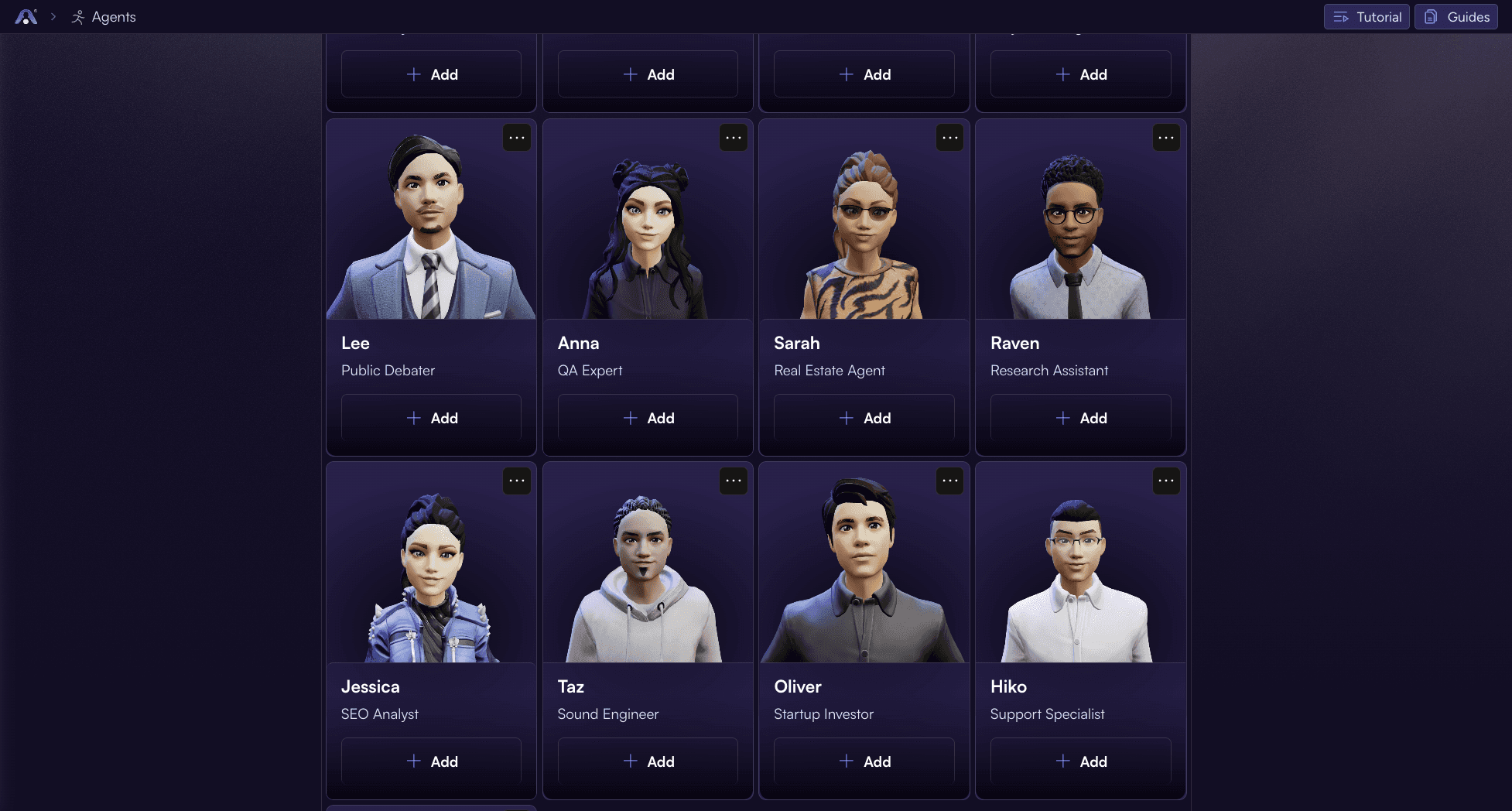
If you want to build a structured AI council rather than rely on scattered tools, Agent.so allows you to create customizable AI agents aligned with your startup functions.
You can design specialized agents for SaaS marketing, SEO optimization, support analysis, onboarding documentation, and operational review. Each agent can reflect your product context, brand voice, and workflow logic.
Instead of juggling disconnected prompts across platforms, you operate within a unified AI collaboration environment.
For bootstrapped SaaS founders, that means scaling systems before scaling payroll. Explore how to design your founder AI council at Agent.so and build your SaaS with leverage from day one.
Bootstrapping a SaaS business has always required discipline.
You are managing product development, customer support, marketing, operations, and strategy with limited capital and limited time. Every hire feels risky. Every delay feels expensive.
In the past, founders had only two options. Burn cash on early hires or absorb the workload themselves.
Today, AI agents open up a new path.
By building a structured AI council, founders can create specialized AI agents that handle repeatable cognitive work across the company.
This approach allows bootstrapped SaaS teams to operate with leverage, validate systems before hiring, and scale thoughtfully.
The goal is not to eliminate human talent. The goal is to delay fixed costs until revenue stability justifies them.
Designing an AI Council Instead of Random Automation
Most founders experiment with AI casually.
They generate content occasionally or summarize documents when overwhelmed. That creates temporary relief but not structural leverage.
An AI council is different.
It is a deliberate collection of role-based AI agents aligned with actual business functions. Instead of using one general assistant, you define clear domains.
Defining Functional Roles for AI Agents
In a bootstrapped SaaS environment, the most common early roles include marketing strategist, customer support assistant, feedback analyst, documentation editor, and growth experimentation partner.
Each AI agent should have a narrow focus:
A marketing AI agent analyzes positioning and SEO.
A support AI agent categorizes tickets and extracts recurring issues.
A feedback AI agent summarizes product sentiment trends.
Specialization increases quality. Vague usage decreases it.
Why Structure Matters in AI Automation for Startups
AI amplifies structure. It does not create it.
If your workflows are inconsistent, AI will replicate inconsistency. If your processes are defined, AI reinforces clarity.
Before building your AI council, map recurring workflows in your SaaS business. Identify which tasks repeat weekly or monthly. Those are your candidates for automation.
Building a Marketing Engine With AI Agents
Marketing is usually the most fragile function in a bootstrapped SaaS.
You need SEO traction, clear positioning, consistent content, and persuasive messaging. Without a system, marketing becomes sporadic and reactive.
Using AI for SaaS SEO and Positioning
An AI marketing agent should not just write blog posts.
It should analyze competitive messaging, extract differentiation themes, and identify keyword clusters aligned with buyer intent.
Use tools like Ahrefs or SEMrush to validate search demand. Monitor Google Search Console to understand which queries already generate impressions. Feed that data into your AI agent for deeper analysis.
Instead of asking for generic articles, ask for structured outlines that support topical authority. Over time, this builds a coherent content strategy rather than scattered posts.
Turning AI Into a Messaging Refinement Partner
Positioning evolves as your SaaS matures.
An AI agent can review landing pages and suggest clarity improvements. It can simulate skeptical customer objections. It can highlight vague claims and replace them with outcome-focused statements.
AI agents for founders are most powerful when they refine thinking, not just generate text.
Transforming Customer Support Into Product Intelligence
Early stage founders often handle support personally.
This is valuable but inefficient when volume increases.
AI agents for SaaS customer support can categorize tickets, detect sentiment, and summarize recurring themes.
Extracting Insight From Support Conversations
Instead of reading every ticket manually, build a weekly workflow where transcripts from Intercom, Zendesk, or email threads are analyzed by a feedback AI agent.
Ask it to identify patterns in confusion, frustration, and feature requests. Over time, this reveals friction points in onboarding and usability.
AI automation for startups becomes strategic when communication data feeds product decisions.
Strengthening Retention With Structured Feedback Loops
Retention is often a documentation problem rather than a feature problem. If onboarding is unclear, churn increases.
Use an AI documentation agent to review help articles and onboarding flows regularly.
Ask it to flag unclear instructions and missing steps.
Update documentation consistently based on support trends.
Lean SaaS growth depends on reducing friction before it escalates.
Using AI Agents for Founder Level Decision Support
Bootstrapped founders make dozens of decisions each week.
Revenue allocation, roadmap prioritization, marketing experiments, and pricing adjustments all compete for attention.
AI agents can function as structured decision support systems.
Weekly Executive Reviews Powered by AI
Once per week, compile revenue data from Stripe, usage metrics from your product analytics tool, support summaries, and marketing performance metrics.
Feed this into an AI analysis workflow.
Ask structured questions:
Where are we leaking attention?
Which activities produce the highest measurable return?
What patterns correlate with churn or activation changes?
AI does not replace judgment. It accelerates pattern recognition. Speed of insight often determines startup survival.
Governance and Responsible AI Use in Bootstrapped SaaS
AI councils require guardrails.
High risk decisions such as pricing changes, legal updates, or public announcements should remain human controlled. AI should support analysis and drafting, not final approval.
Human oversight ensures accountability and protects brand integrity. AI agents for entrepreneurs should function as structured collaborators, not autonomous executives.
Knowing When to Hire Instead of Automate
AI automation for startups allows you to postpone hiring, but not avoid it indefinitely.
As revenue stabilizes and workflows mature, clear hiring signals appear:
Support volume may exceed automated triage capacity.
Marketing may demand specialized creativity.
Engineering may require deep technical focus.
The advantage of building an AI council early is clarity.
By the time you hire, you understand exactly which functions generate return. AI agents help you validate demand before committing to payroll.
This reduces risk and increases efficiency.
The Strategic Edge of AI Native Founders
Founders who integrate AI agents early build stronger operational habits.
They document processes earlier.
They analyze patterns consistently.
They reduce repetitive thinking.
They design workflows intentionally.
This compounds over time. Bootstrapped SaaS founders traditionally compete on resource efficiency. AI agents increase that efficiency dramatically.
AI automation for startups is not about replacing ambition. It is about protecting it.
Building Your AI Council With Agent.so
If you want to build a structured AI council rather than rely on scattered tools, Agent.so allows you to create customizable AI agents aligned with your startup functions.
You can design specialized agents for SaaS marketing, SEO optimization, support analysis, onboarding documentation, and operational review. Each agent can reflect your product context, brand voice, and workflow logic.
Instead of juggling disconnected prompts across platforms, you operate within a unified AI collaboration environment.
For bootstrapped SaaS founders, that means scaling systems before scaling payroll. Explore how to design your founder AI council at Agent.so and build your SaaS with leverage from day one.
Guide
AI Agents for Bootstrapped SaaS Businesses