

Most people who start learning marketing with AI begin in the same place. They use AI to speed things up. Faster copy, quicker ideas, more posts. That phase feels productive, but it rarely changes results in a meaningful way.
At the same time, something else is happening at the top of the market. Large brands are trusting AI with full marketing campaigns. Not internal drafts. Not experiments hidden behind A/B tests. Full creative direction, messaging, and execution in front of massive audiences.
That contrast reveals the real opportunity. AI in marketing is not about writing more. It is about making better decisions faster, maintaining consistency at scale, and reducing the cost of learning what works.
This guide is written for internet marketers and entrepreneurs who want to move beyond surface-level AI usage and understand how AI agents actually fit into campaign strategy, brand trust, and long-term growth.
What AI Agents Actually Do in Marketing Campaigns
Before looking at examples, it helps to clarify what an AI agent is in a marketing context. Many people still think of AI as a single prompt-response tool. That view limits its usefulness.
In marketing, an AI agent acts as a continuous system, not a one-time generator. It connects multiple parts of the workflow that are usually fragmented. Research, ideation, execution, optimization, and repurposing all live in one loop.
From Tasks to Systems
Traditional marketing tools do one thing well. Email tools send emails. Analytics tools report numbers. Writing tools generate copy.
An AI agent sits above those layers. It remembers goals, audience context, and brand tone, then applies that understanding across outputs.
For example, instead of asking for a single blog post, a marketer can ask an AI agent to develop a campaign narrative, adapt it for different channels, and refine messaging based on engagement signals. This system-level thinking is what allows AI to support real campaigns rather than isolated assets.
A good reference for understanding this shift is Andreessen Horowitz’s writing on AI as systems rather than tools, which explains why agents matter more than prompts.
Why Brands Trust AI in High-Stakes Marketing
Using AI in visible marketing is not safe. It exposes brands to criticism, misunderstanding, and public debate. Yet more companies are choosing to do exactly that.
The reason is not novelty. It is economics and competition.
Speed as a Competitive Advantage
Modern marketing rewards speed of learning more than perfection. AI agents allow teams to explore dozens of creative directions quickly, test messaging across channels, and adapt campaigns mid-flight.
In traditional workflows, creative decisions are expensive and slow. AI reduces that cost dramatically. This makes experimentation less risky, even when the campaign itself is high visibility.
This is why AI has moved into advertising environments like national TV and major digital launches. The ability to iterate quickly often outweighs the discomfort of using new technology.
Consistency at Scale
Large campaigns fail more often from inconsistency than from bad ideas. Messaging drifts across regions, platforms, and formats. AI agents excel at maintaining a unified narrative while adapting language and format.
This consistency is one of the main reasons enterprise brands trust AI. It acts as a stabilizing force in complex marketing operations.
What AI-Generated Advertising Teaches Marketers
One of the most discussed examples involved a spirits brand airing a largely Super Bowl AI commercial. The important detail is not whether the ad was universally praised. It is the decision itself.
The Super Bowl is the most expensive advertising environment in the world. Every frame is scrutinized by consumers, critics, and competitors. Trusting AI in that context signals that AI has moved into core brand storytelling.
From a learning perspective, this teaches three things.
AI Can Carry Primary Messaging: when guided properly, AI can express brand voice at a level that is publicly acceptable. This challenges the assumption that AI is only suitable for drafts or internal content.
Attention Is Part of the Outcome: even controversy generates distribution. Campaigns that spark discussion earn media coverage, backlinks, and social engagement. For SEO and brand visibility, this matters.
Execution Matters More Than Origin: audiences reacted less to the fact that AI was used and more to how the ad made them feel. This reinforces a core marketing truth. Tools matter less than outcomes.
For marketers wanting to explore how major brands think about AI creativity, platforms like Adweek and Think with Google regularly analyze these campaigns in depth.

Where AI Campaigns Go Wrong and Why Audiences Push Back
AI-driven marketing does not always succeed. In fact, some campaigns fail precisely because AI is used poorly.
The Authenticity Problem
Audiences tend to push back when AI is used in emotionally sensitive storytelling without transparency. When content feels synthetic or manipulative, trust erodes quickly.
This is not an anti-AI reaction. It is a reaction to misaligned intent. People are more accepting of AI when it is positioned as support, not deception.
Transparency Builds Trust
Brands that explain how AI supports their process often maintain credibility. This aligns with broader trends in ethical AI and consumer trust discussed by organizations like the World Economic Forum and MIT Technology Review.
For entrepreneurs, the lesson is clear. AI should enhance clarity, not obscure authorship or intent.
Applying These Lessons as an Internet Marketer
You do not need enterprise budgets to apply enterprise thinking. High-stakes moments exist at every level of online business.
Identifying Your High-Stakes Moments
For smaller teams, high-stakes marketing moments include:
Product launches
Homepage messaging
Pricing pages
Flagship content
Email sequences tied to revenue
These are moments where clarity and consistency matter more than volume.
Where AI Agents Add the Most Value
AI agents are most useful when they help you:
Explore messaging options before committing
Maintain consistency across channels
Repurpose strong ideas instead of creating new ones constantly
Reduce time between insight and execution
They are least useful when they are used to publish content without strategy.
Building Authority and SEO Value With AI Agents
One of the biggest SEO mistakes marketers make with AI is chasing output volume. Search engines reward depth, coherence, and originality, not frequency alone.
How AI Supports Authority Building
AI agents help marketers reinforce ideas across formats. One strong concept can become long-form content, email messaging, social commentary, and paid ads without losing alignment.
This repetition builds topical authority, which search engines recognize through engagement signals, backlinks, and brand mentions.
Google Search Central consistently emphasizes helpful content, experience, and usefulness. AI supports scale, but authority comes from insight.

The Long-Term Role of AI in Marketing Strategy
AI agents are moving upstream. They are beginning to influence positioning, timing, and narrative direction, not just execution.
This does not reduce the need for marketers. It raises the bar. Poor judgment becomes more visible when execution is fast. Good judgment compounds faster.
Marketers who learn to collaborate with AI thoughtfully will not just produce more content. They will make better decisions under pressure.
Learning Marketing With AI Beyond Automation
The real lesson from brands using AI in marketing campaigns is not that AI guarantees success. It is that AI changes how marketing decisions are made.
For internet marketers and entrepreneurs, AI agents offer leverage, not shortcuts. They reduce friction, increase clarity, and help scale consistency, but only when paired with human judgment and strategy.
Learning marketing with AI means understanding where automation helps and where human insight is essential. Those who master that balance will not just rank better. They will build stronger, more resilient brands.
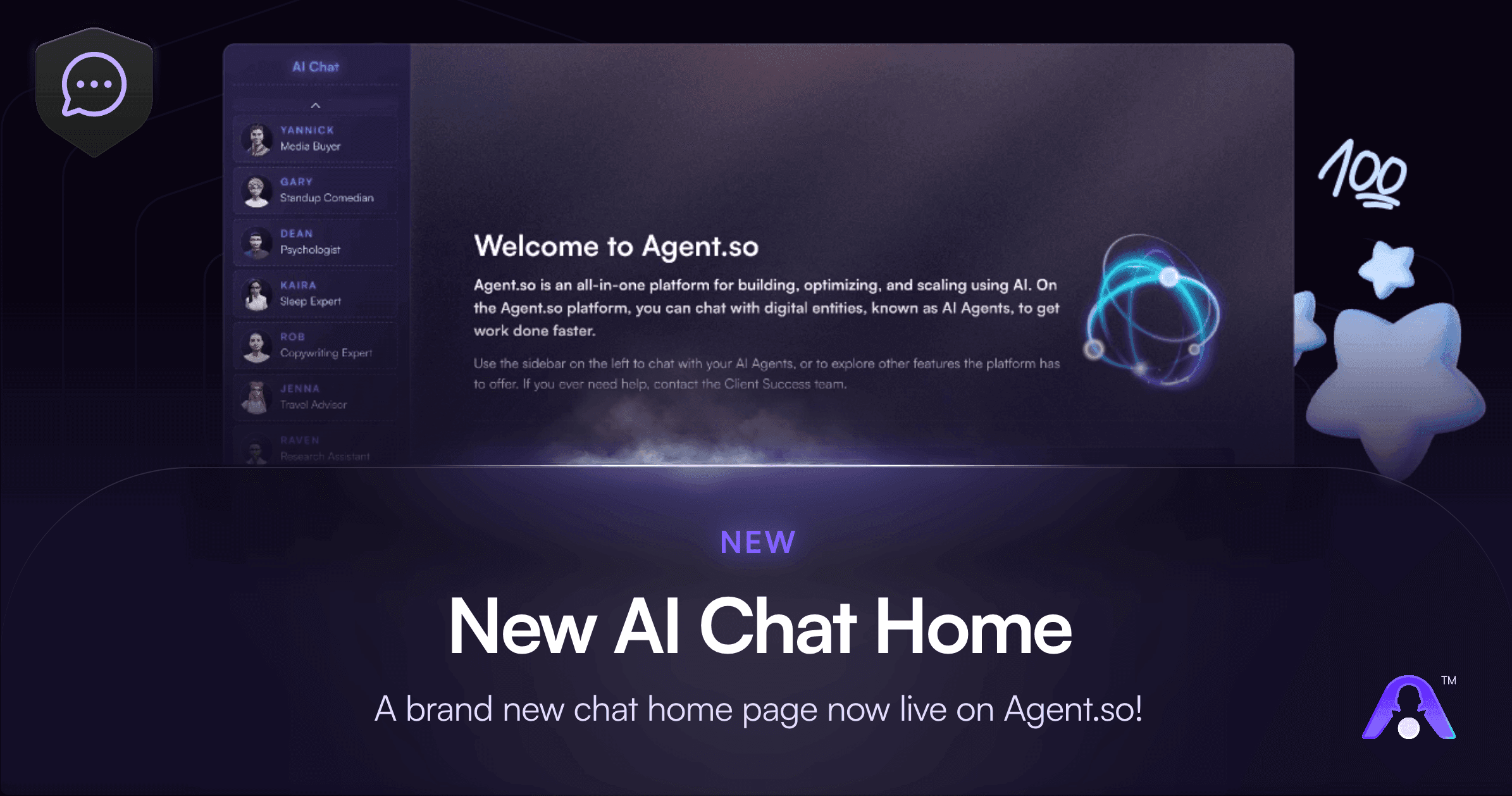
If you want to explore this approach in practice, Agent.so gives you a way to work with AI agents as ongoing collaborators, not one-off tools.
You can experiment with campaign ideas, refine messaging, repurpose content across channels, and build systems that support real marketing decisions over time.
Most people who start learning marketing with AI begin in the same place. They use AI to speed things up. Faster copy, quicker ideas, more posts. That phase feels productive, but it rarely changes results in a meaningful way.
At the same time, something else is happening at the top of the market. Large brands are trusting AI with full marketing campaigns. Not internal drafts. Not experiments hidden behind A/B tests. Full creative direction, messaging, and execution in front of massive audiences.
That contrast reveals the real opportunity. AI in marketing is not about writing more. It is about making better decisions faster, maintaining consistency at scale, and reducing the cost of learning what works.
This guide is written for internet marketers and entrepreneurs who want to move beyond surface-level AI usage and understand how AI agents actually fit into campaign strategy, brand trust, and long-term growth.
What AI Agents Actually Do in Marketing Campaigns
Before looking at examples, it helps to clarify what an AI agent is in a marketing context. Many people still think of AI as a single prompt-response tool. That view limits its usefulness.
In marketing, an AI agent acts as a continuous system, not a one-time generator. It connects multiple parts of the workflow that are usually fragmented. Research, ideation, execution, optimization, and repurposing all live in one loop.
From Tasks to Systems
Traditional marketing tools do one thing well. Email tools send emails. Analytics tools report numbers. Writing tools generate copy.
An AI agent sits above those layers. It remembers goals, audience context, and brand tone, then applies that understanding across outputs.
For example, instead of asking for a single blog post, a marketer can ask an AI agent to develop a campaign narrative, adapt it for different channels, and refine messaging based on engagement signals. This system-level thinking is what allows AI to support real campaigns rather than isolated assets.
A good reference for understanding this shift is Andreessen Horowitz’s writing on AI as systems rather than tools, which explains why agents matter more than prompts.
Why Brands Trust AI in High-Stakes Marketing
Using AI in visible marketing is not safe. It exposes brands to criticism, misunderstanding, and public debate. Yet more companies are choosing to do exactly that.
The reason is not novelty. It is economics and competition.
Speed as a Competitive Advantage
Modern marketing rewards speed of learning more than perfection. AI agents allow teams to explore dozens of creative directions quickly, test messaging across channels, and adapt campaigns mid-flight.
In traditional workflows, creative decisions are expensive and slow. AI reduces that cost dramatically. This makes experimentation less risky, even when the campaign itself is high visibility.
This is why AI has moved into advertising environments like national TV and major digital launches. The ability to iterate quickly often outweighs the discomfort of using new technology.
Consistency at Scale
Large campaigns fail more often from inconsistency than from bad ideas. Messaging drifts across regions, platforms, and formats. AI agents excel at maintaining a unified narrative while adapting language and format.
This consistency is one of the main reasons enterprise brands trust AI. It acts as a stabilizing force in complex marketing operations.
What AI-Generated Advertising Teaches Marketers
One of the most discussed examples involved a spirits brand airing a largely Super Bowl AI commercial. The important detail is not whether the ad was universally praised. It is the decision itself.
The Super Bowl is the most expensive advertising environment in the world. Every frame is scrutinized by consumers, critics, and competitors. Trusting AI in that context signals that AI has moved into core brand storytelling.
From a learning perspective, this teaches three things.
AI Can Carry Primary Messaging: when guided properly, AI can express brand voice at a level that is publicly acceptable. This challenges the assumption that AI is only suitable for drafts or internal content.
Attention Is Part of the Outcome: even controversy generates distribution. Campaigns that spark discussion earn media coverage, backlinks, and social engagement. For SEO and brand visibility, this matters.
Execution Matters More Than Origin: audiences reacted less to the fact that AI was used and more to how the ad made them feel. This reinforces a core marketing truth. Tools matter less than outcomes.
For marketers wanting to explore how major brands think about AI creativity, platforms like Adweek and Think with Google regularly analyze these campaigns in depth.
Where AI Campaigns Go Wrong and Why Audiences Push Back
AI-driven marketing does not always succeed. In fact, some campaigns fail precisely because AI is used poorly.
The Authenticity Problem
Audiences tend to push back when AI is used in emotionally sensitive storytelling without transparency. When content feels synthetic or manipulative, trust erodes quickly.
This is not an anti-AI reaction. It is a reaction to misaligned intent. People are more accepting of AI when it is positioned as support, not deception.
Transparency Builds Trust
Brands that explain how AI supports their process often maintain credibility. This aligns with broader trends in ethical AI and consumer trust discussed by organizations like the World Economic Forum and MIT Technology Review.
For entrepreneurs, the lesson is clear. AI should enhance clarity, not obscure authorship or intent.
Applying These Lessons as an Internet Marketer
You do not need enterprise budgets to apply enterprise thinking. High-stakes moments exist at every level of online business.
Identifying Your High-Stakes Moments
For smaller teams, high-stakes marketing moments include:
Product launches
Homepage messaging
Pricing pages
Flagship content
Email sequences tied to revenue
These are moments where clarity and consistency matter more than volume.
Where AI Agents Add the Most Value
AI agents are most useful when they help you:
Explore messaging options before committing
Maintain consistency across channels
Repurpose strong ideas instead of creating new ones constantly
Reduce time between insight and execution
They are least useful when they are used to publish content without strategy.
Building Authority and SEO Value With AI Agents
One of the biggest SEO mistakes marketers make with AI is chasing output volume. Search engines reward depth, coherence, and originality, not frequency alone.
How AI Supports Authority Building
AI agents help marketers reinforce ideas across formats. One strong concept can become long-form content, email messaging, social commentary, and paid ads without losing alignment.
This repetition builds topical authority, which search engines recognize through engagement signals, backlinks, and brand mentions.
Google Search Central consistently emphasizes helpful content, experience, and usefulness. AI supports scale, but authority comes from insight.
The Long-Term Role of AI in Marketing Strategy
AI agents are moving upstream. They are beginning to influence positioning, timing, and narrative direction, not just execution.
This does not reduce the need for marketers. It raises the bar. Poor judgment becomes more visible when execution is fast. Good judgment compounds faster.
Marketers who learn to collaborate with AI thoughtfully will not just produce more content. They will make better decisions under pressure.
Learning Marketing With AI Beyond Automation
The real lesson from brands using AI in marketing campaigns is not that AI guarantees success. It is that AI changes how marketing decisions are made.
For internet marketers and entrepreneurs, AI agents offer leverage, not shortcuts. They reduce friction, increase clarity, and help scale consistency, but only when paired with human judgment and strategy.
Learning marketing with AI means understanding where automation helps and where human insight is essential. Those who master that balance will not just rank better. They will build stronger, more resilient brands.
If you want to explore this approach in practice, Agent.so gives you a way to work with AI agents as ongoing collaborators, not one-off tools.
You can experiment with campaign ideas, refine messaging, repurpose content across channels, and build systems that support real marketing decisions over time.
Guide
AI Agents for Marketing Campaigns: How Brands Use AI in High-Stakes Advertising