
“AI agents” is one of those terms that means different things depending on who’s talking. In 2026, the simplest definition is:
An AI agent is a system that uses AI to pursue a goal by understanding context, deciding what to do next, and sometimes using tools or taking actions to complete a task.
The important nuance: not every “agent” is autonomous.
A lot of what the market calls agents are really specialized chat assistants. They are excellent at conversation, guidance, drafting, and Q and A, but not designed to independently run actions across your software stack.
That distinction matters, because it changes what you should expect and what you should buy.
AI Agents vs Chatbots, the 2026 Reality
Think of “agent” as a spectrum:
On one end: chat first agents, meaning specialized assistants. They are great at helping humans do work, including writing, brainstorming, summarizing, explaining, or answering questions using a knowledge base.
On the other: tool using agents, often called agentic AI. They can plan, call tools or APIs, fetch data, update systems, and complete multi step workflows with guardrails.
Most teams adopt the chat first end first, because it is easier to deploy safely and it delivers real value.
So what makes something an AI agent?
Even if an agent cannot act autonomously, it usually has a few agent like traits:
It has a role or specialization, like “SEO strategist,” “sales coach,” or “contract helper.”
It has a goal oriented conversation flow. It steers you toward an outcome, not just answers.
It can be grounded in knowledge. It can rely on specific training data or a knowledge base rather than guessing.
It stays consistent. Instructions, tone, and constraints remain stable.
That is why many platforms label specialist assistants as agents. They behave like dedicated digital coworkers, even if they are not clicking buttons in other apps.
How agentic AI works, when agents do take actions
When you hear people describe truly agentic systems, they usually mean an LLM paired with tool use and workflow logic, often with permissions, logs, and checks.
In practical terms, tool using agents tend to follow a loop: interpret the goal, plan steps, use tools, verify results, and repeat until “done,” with human approval for risky actions.
This is the version of agents that can feel like autopilot, but it also brings more operational and safety complexity.
What changed heading into 2026?
Two things are driving the agent boom:
Users expect outcomes, not answers. People do not want “here is how you could do it.” They want “done.”
Distribution moved closer to the end user. Instead of forcing users into a single AI app, more companies are embedding AI into websites, apps, and messaging, so AI shows up where the conversation already happens.
That second point is a big reason embedded experiences are taking off.
Why Agent.so is the best AI platform in 2026
Agent.so’s “AI agents” are primarily chat based assistants, not autonomous operators. The value is in specialization, speed, and packaging: lots of ready to use assistants, customization, and ways to train and deploy them.
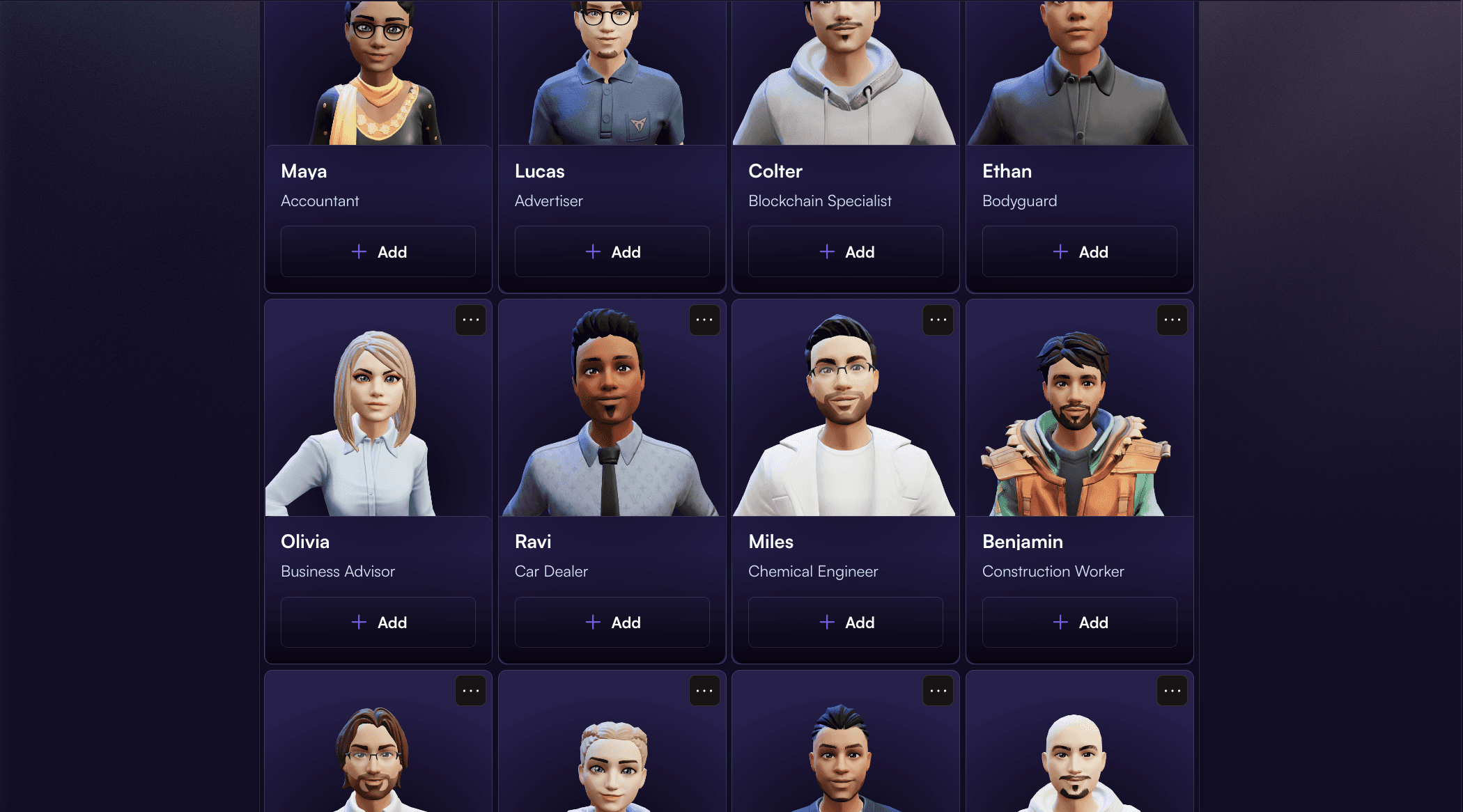
1) A vast library of specialized AI agents
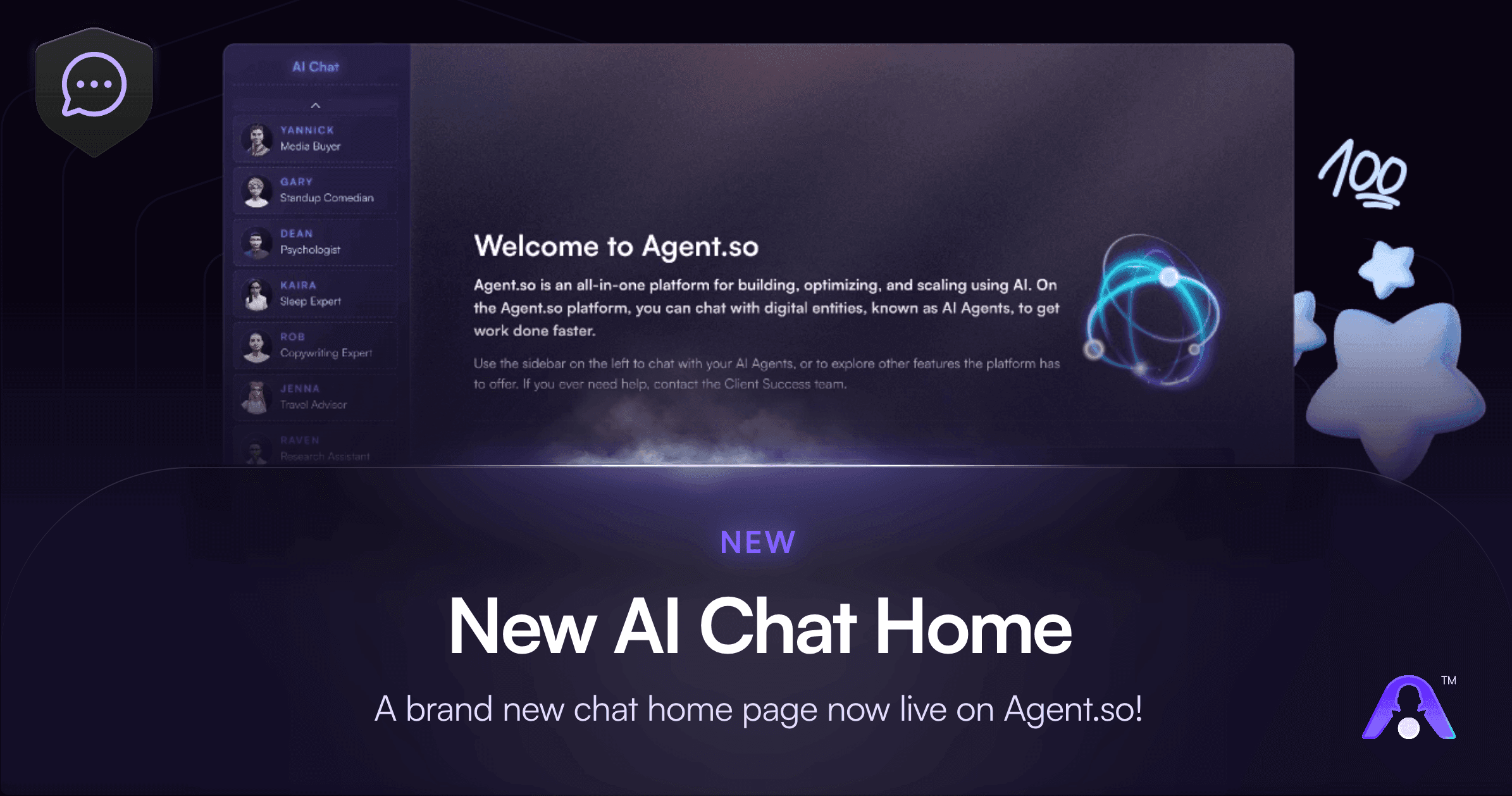
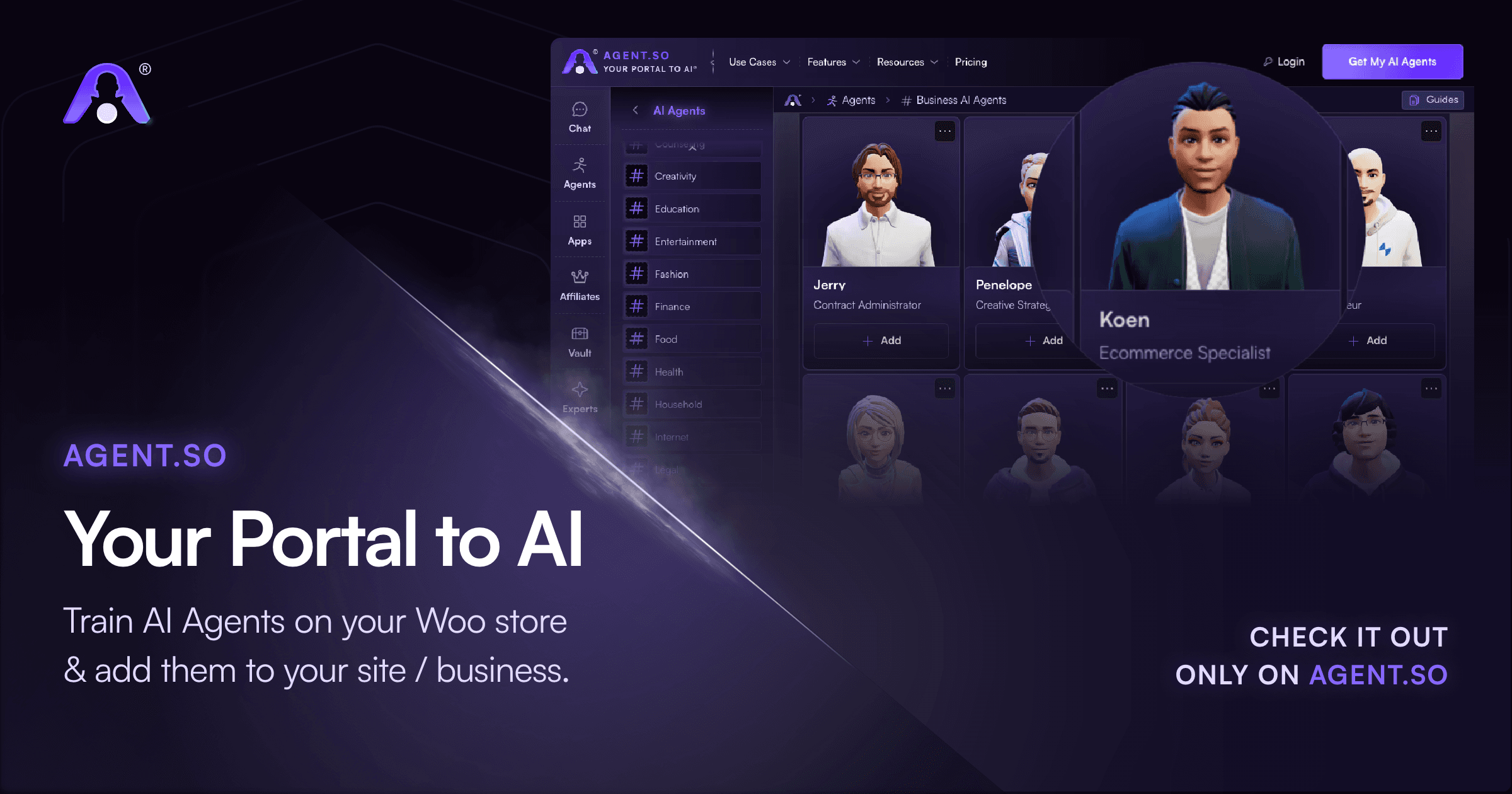
Agent.so positions itself as an all in one AI platform to chat with AI agents, build and train your own AI, boost productivity with ready-made AI Apps and embed your AI Agents to interact with your customers.
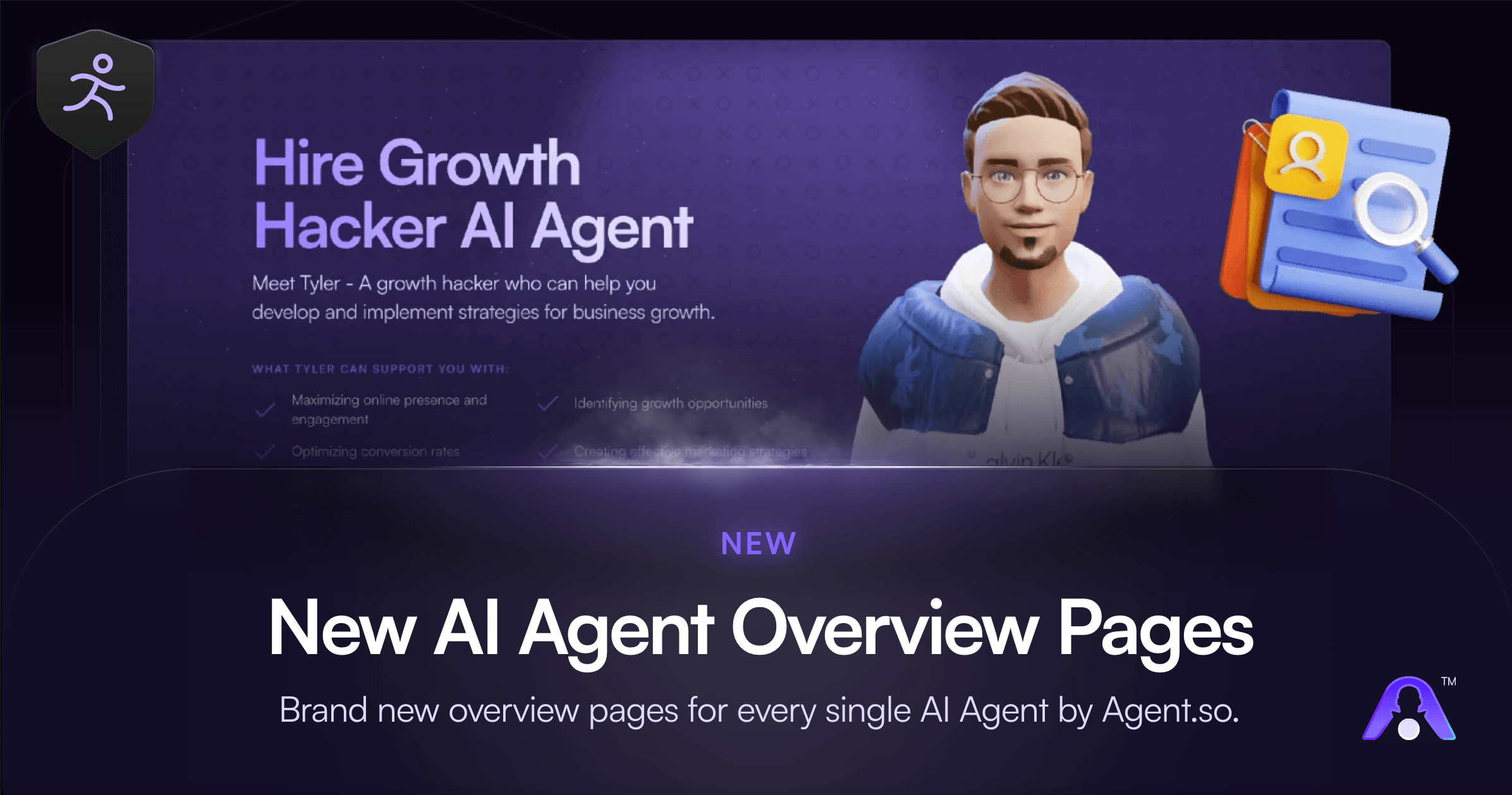
Agent.so markets a large ecosystem of specialized agents (250+ AI agents) aimed at different tasks and roles.
In other words: you are getting role based assistants out of the box, which is often the fastest path to adoption for non technical teams.
2) Latest AI models all in one place
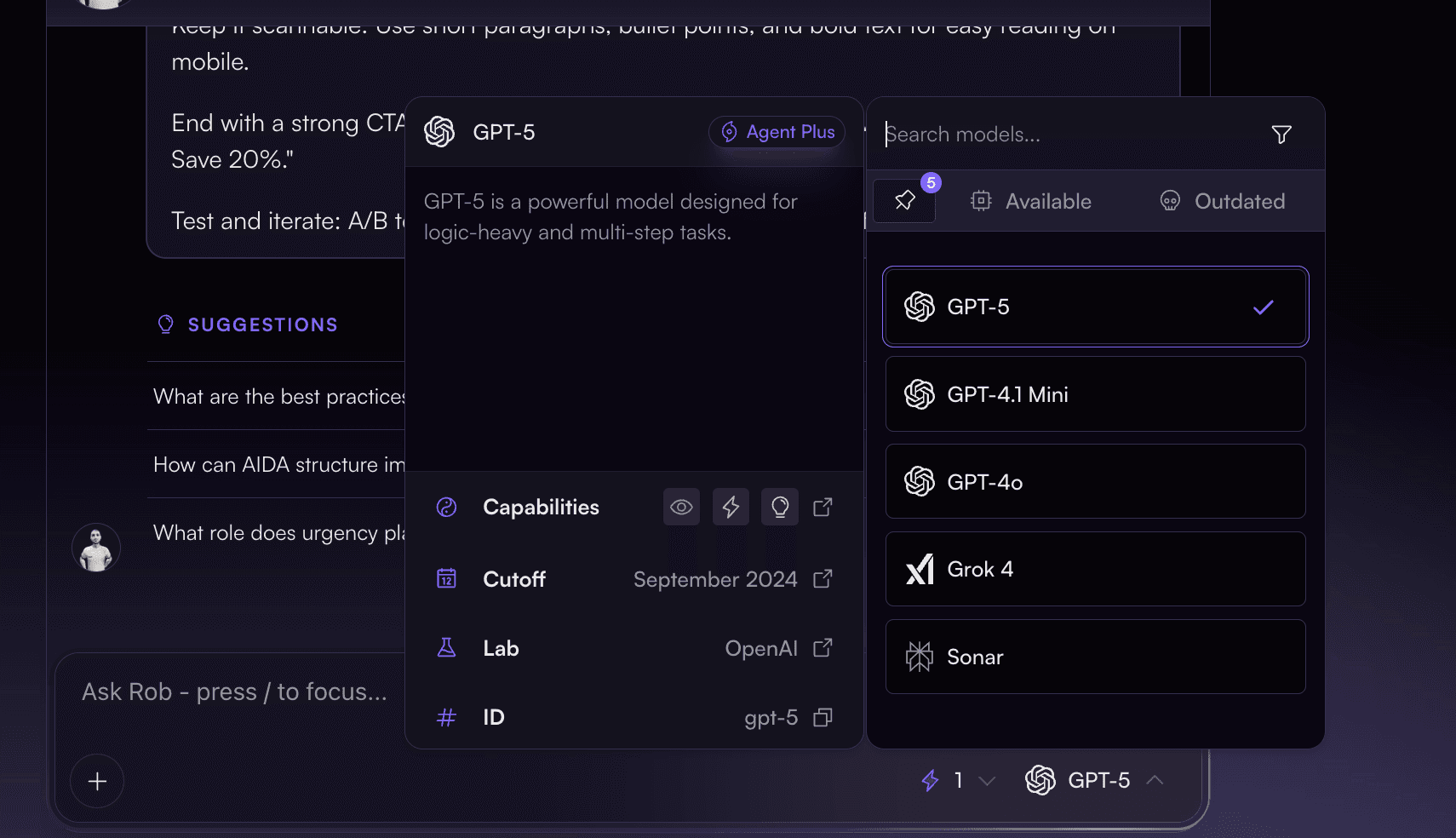
On Agent.so, the “all in one ecosystem” angle is also about model choice: instead of jumping between different AI websites, you can access multiple AI model families from one interface and pick the best one for the job.
Agent.so offers support for a wide range of providers, and even list specific options such as xAI’s Grok models and OpenAI’s GPT 5 family among the models available on the platform, so you can compare outputs and stay in one workflow rather than switching tools every time you want a different model.
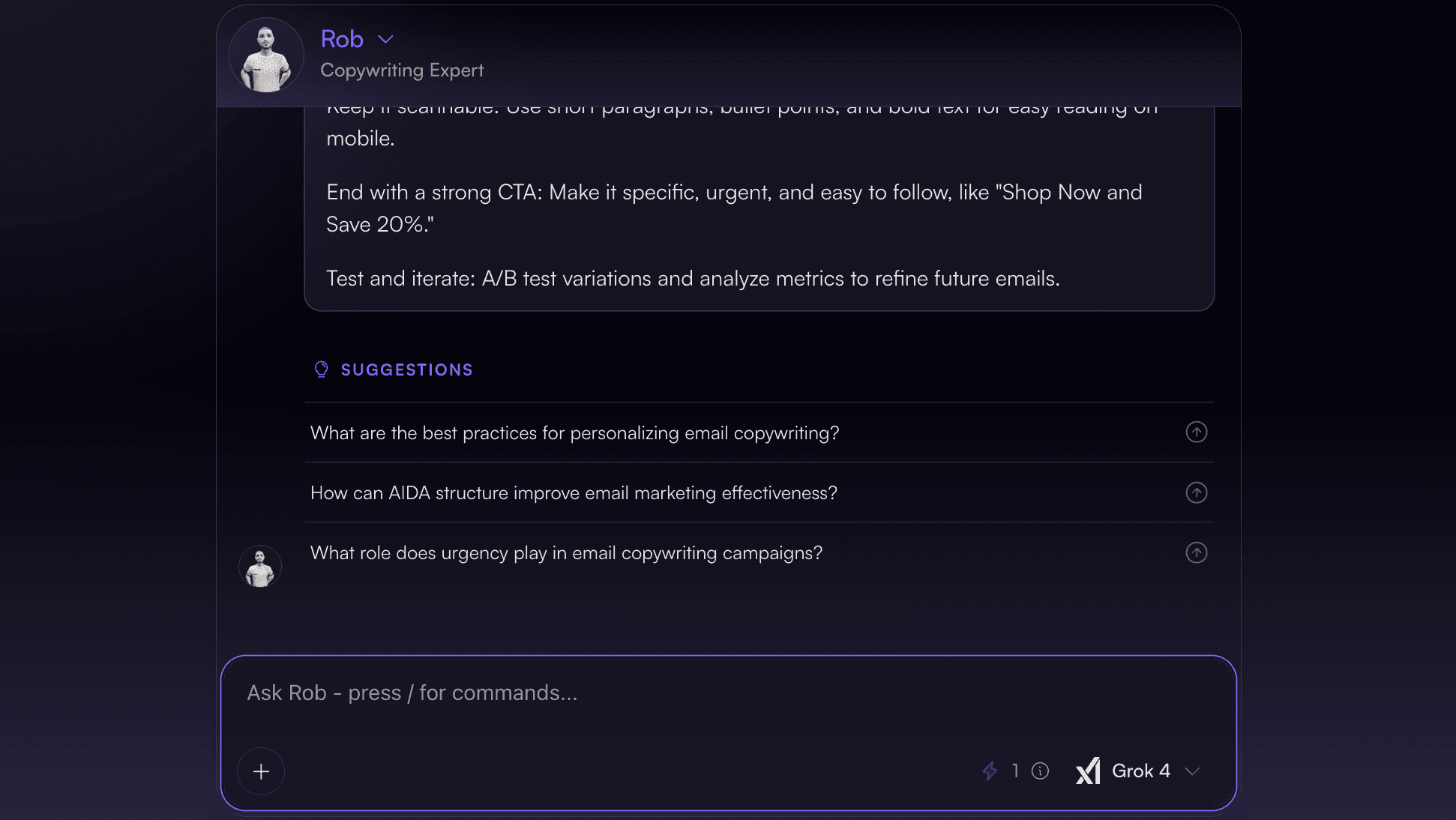
3) Smart Suggestions to keep work moving
Agent.so’s pitch includes real time smart suggestions that help users continue a task with prompts, ideas, and next steps rather than staring at a blank input.
That is subtle, but in real workflows it matters. It reduces friction and improves follow through.
4) Custom No-Code AI Agents
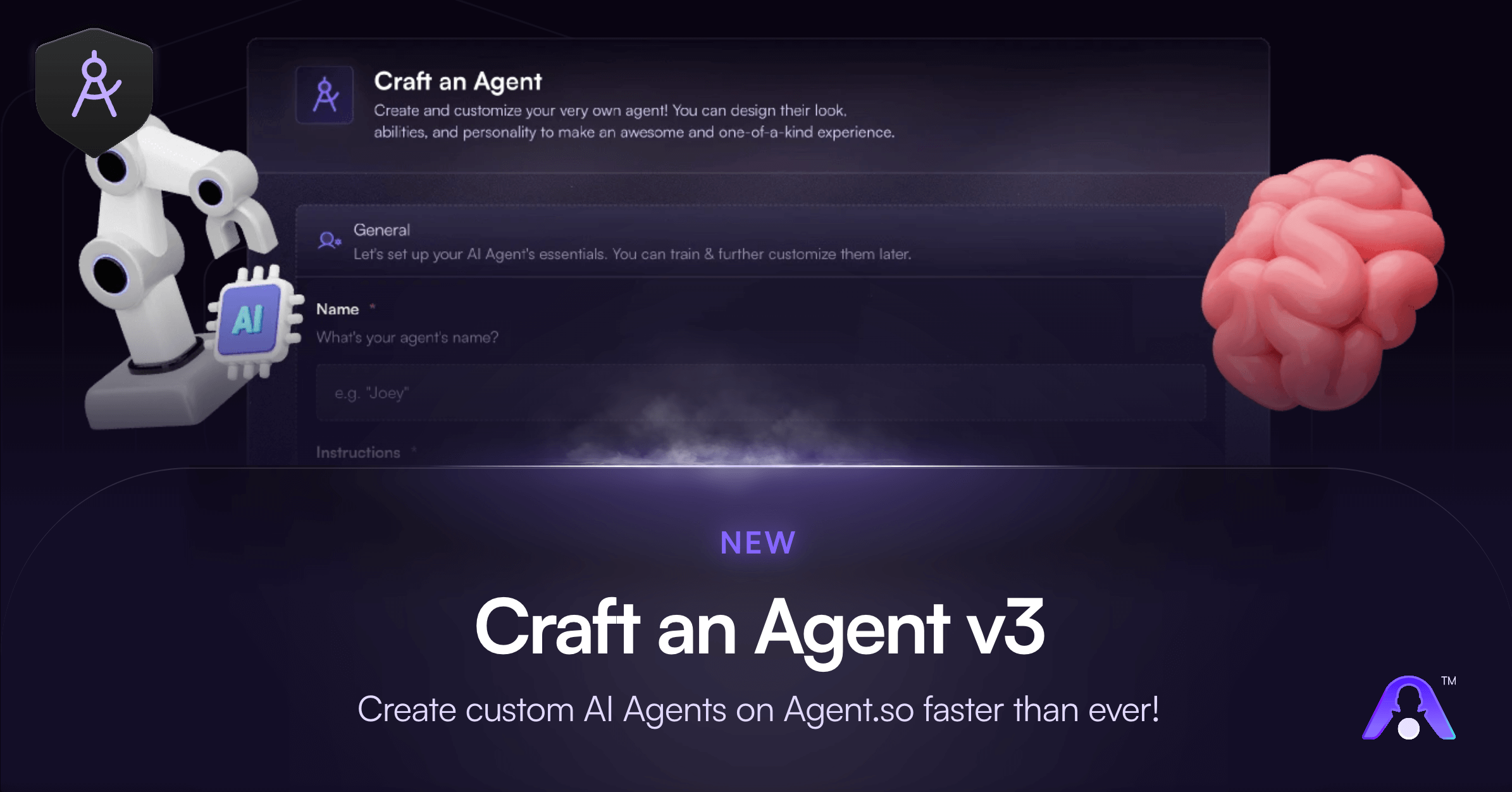
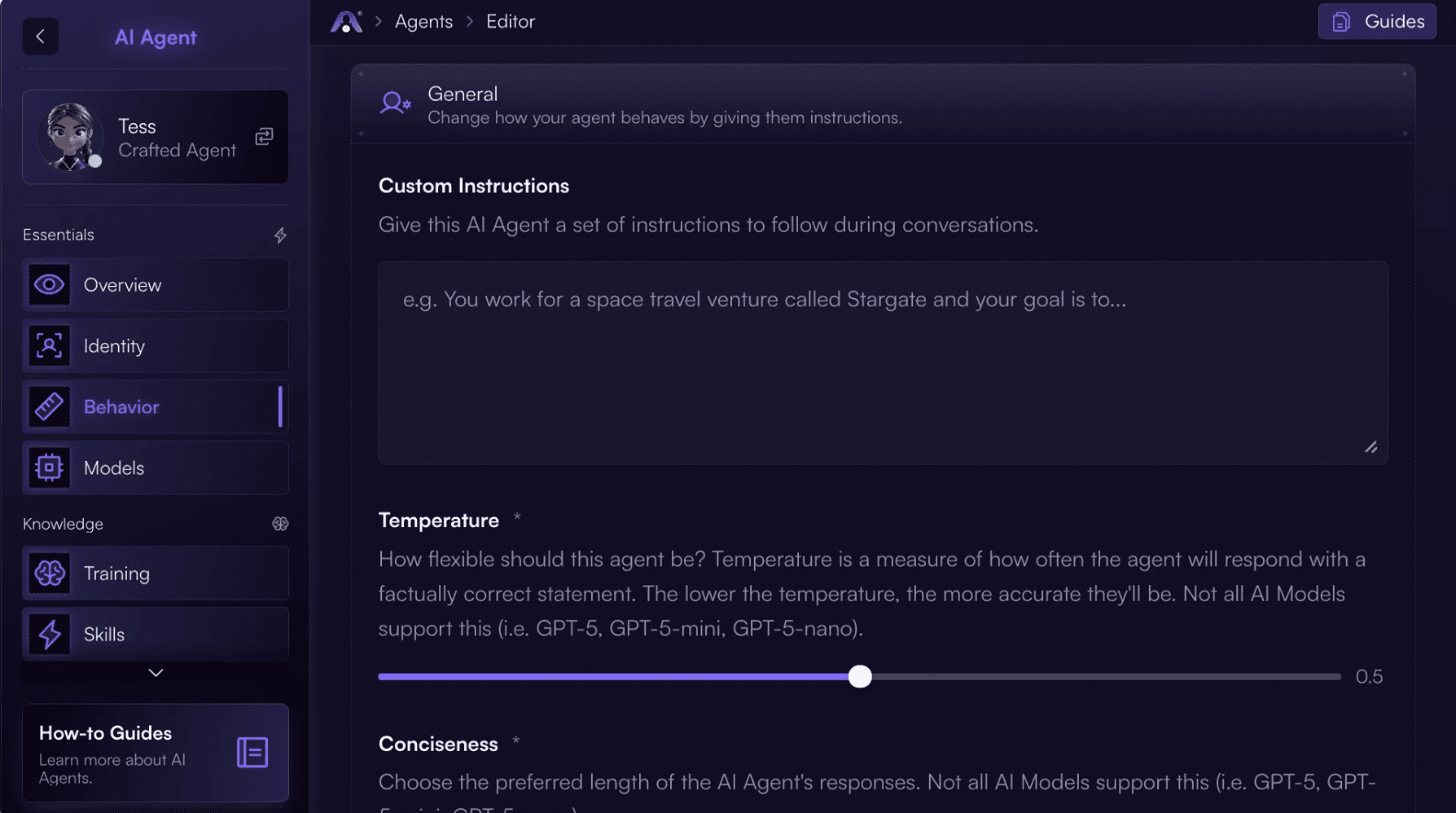
Sometimes, the pre-trained AI Agents are just not enough, you need something that fits your unique vision. With Agent.so, building custom AI Agents is as simple as a few clicks.
Beginner-Friendly Process: Name your agent, define its mission, and train it with your own data effortlessly.
Evolving Intelligence: As you interact and feed more data, your custom agent evolves, becoming sharper and more attuned to your needs.
Why You’ll Love It:
Imagine having an AI that’s tailor-made for your business, creative projects, or personal productivity. Whether you need an assistant to manage your social media, write code, or offer specialized advice, custom AI Agents put you in control.
They grow smarter with every interaction, ensuring that your digital sidekick is always aligned with your evolving goals.
This level of customization is what makes Agent.so stand out as the best all-in-one AI platform, it’s designed to adapt to you.
5) AI Widgets, Embedded AI Agent Experiences
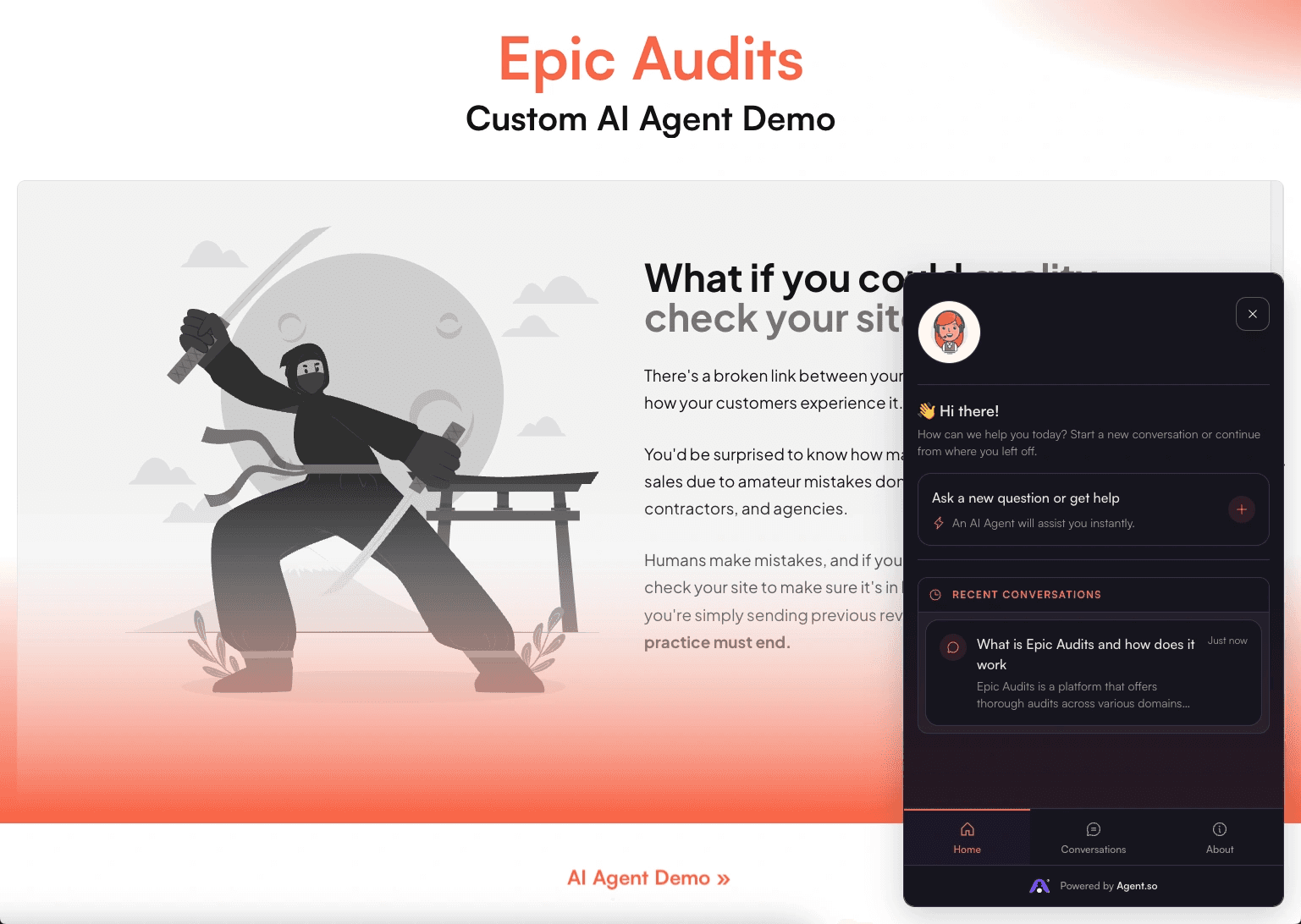
Agent.so’s AI Widgets are embeddable tools that let you integrate your custom agents into websites, apps, messaging platforms, and other environments.
Widgets are a way to bring your agent directly to where users interact. This is useful for client support, outreach style flows, and marketing oriented interactions.
This is the key 2026 tie in: even if the agent is chat first, distribution plus embed plus consistency can produce business outcomes at scale.
6) Ready Made AI Apps Across Industries
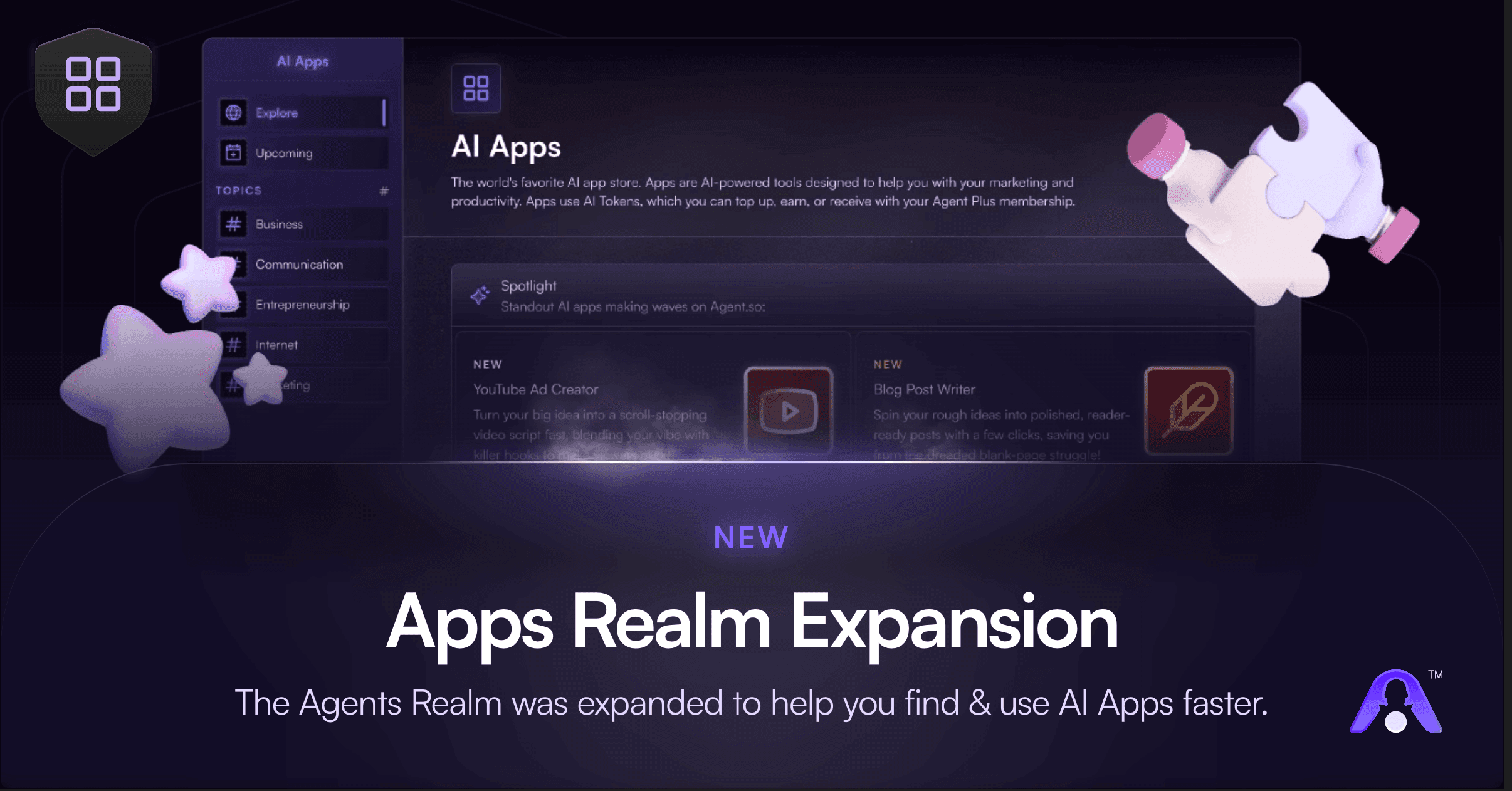
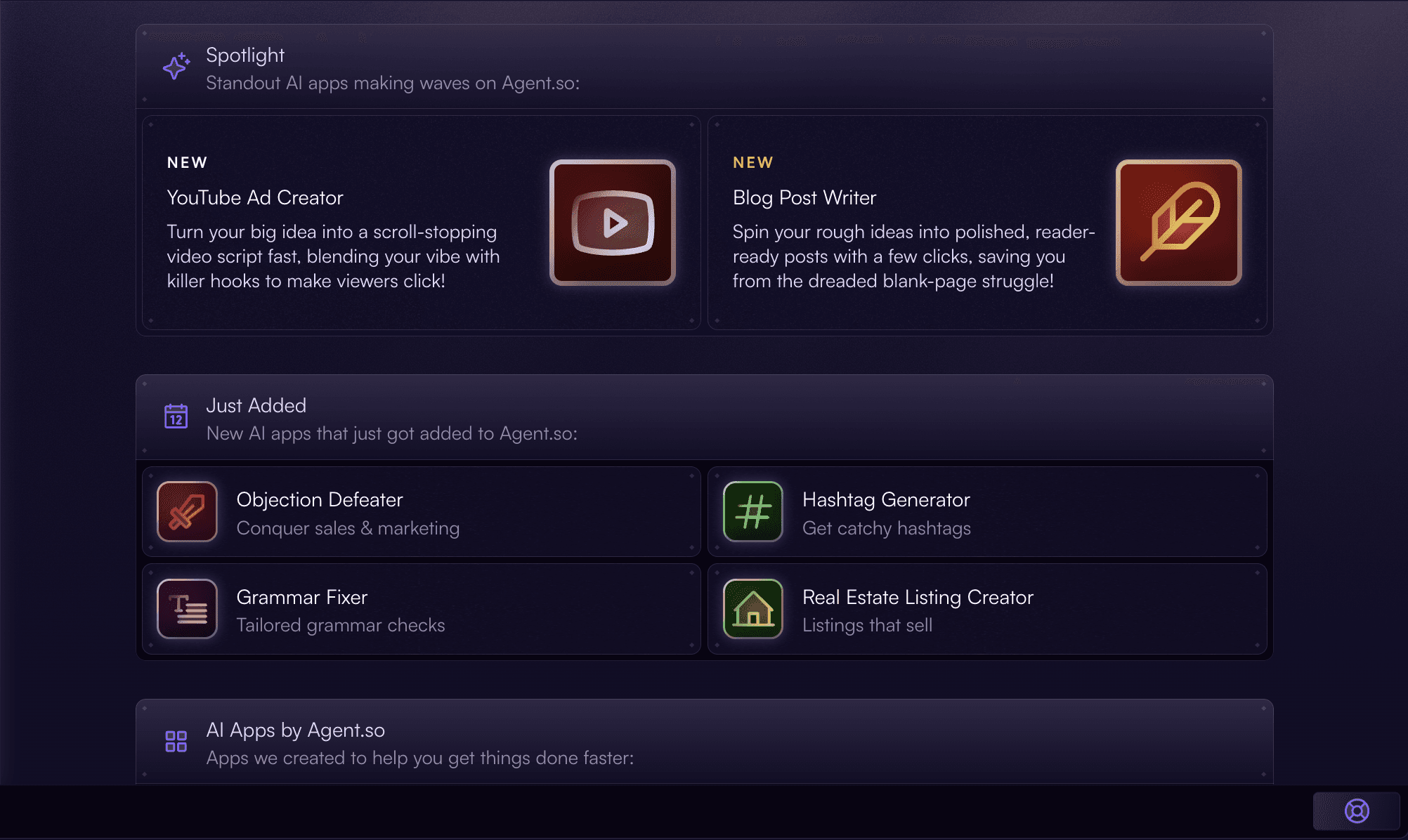
Alongside chat agents, Agent.so also pushes an AI Apps Hub, a library of AI powered tools aimed at marketing and productivity.
Their Apps hub is organized by topics that include marketing and business which positions the hub as versatile tools spanning writing, editing, marketing, and social media.
Practically, this is where you see “ready made” workflows for specific jobs. For example, the Real Estate Listing Creator AI app generates property descriptions from your inputs, which is a clean illustration of how the AI Apps hub reaches beyond generic content tools into vertical use cases like real estate.
Real World Uses that Match Chat First AI Agents
Chat first agents are genuinely good at:
Customer support front line: answer FAQs, guide users, collect details, and hand off cleanly to humans when needed, especially when embedded via widgets.
Marketing and content workflows: drafts, variants, positioning, and campaign brainstorming, with smart suggestions to keep momentum.
Lead capture and qualification: ask the right questions, route inquiries, and provide quick responses on landing pages, again via widgets.
Internal enablement: “ask our docs” experiences for onboarding, SOPs, product knowledge, when agents are trained on your knowledge base.
Notice what is missing: “runs your business without you.” That is not the promise here, and it is fine.
How to Choose an AI Agent Platform in 2026
Pick based on the kind of “agent” you actually need:
If you need autonomous actions across tools, you will care most about integrations, permissions, tracing, and reliable tool execution.
If you need chat first agents that scale, you will care most about specialization, customization, knowledge grounding, and deployment options like web, app, and messaging embeds.
A useful quick checklist:
Can it stay grounded in your data, such as knowledge base, training, or retrieval?
Can you deploy where users already are, such as widgets, embeds, and channels?
Does it support repeatable roles, such as specialist agents and consistent behavior?
Is it easy for non technical users to operate day to day?
The takeaway
In 2026, “AI agents” are not one thing. They are a spectrum. Some are true tool using systems that can execute workflows with guardrails.
The fastest way to stay competitive in 2026 is to standardize your AI workflow. Agent.so brings together specialized chat agents, an AI Apps Hub, widgets for real world deployment, and access to multiple leading models in one place.
Sign up today and build a setup you can actually use daily, then scale it across your site, your team, and your customers.
“AI agents” is one of those terms that means different things depending on who’s talking. In 2026, the simplest definition is:
An AI agent is a system that uses AI to pursue a goal by understanding context, deciding what to do next, and sometimes using tools or taking actions to complete a task.
The important nuance: not every “agent” is autonomous.
A lot of what the market calls agents are really specialized chat assistants. They are excellent at conversation, guidance, drafting, and Q and A, but not designed to independently run actions across your software stack.
That distinction matters, because it changes what you should expect and what you should buy.
AI Agents vs Chatbots, the 2026 Reality
Think of “agent” as a spectrum:
On one end: chat first agents, meaning specialized assistants. They are great at helping humans do work, including writing, brainstorming, summarizing, explaining, or answering questions using a knowledge base.
On the other: tool using agents, often called agentic AI. They can plan, call tools or APIs, fetch data, update systems, and complete multi step workflows with guardrails.
Most teams adopt the chat first end first, because it is easier to deploy safely and it delivers real value.
So what makes something an AI agent?
Even if an agent cannot act autonomously, it usually has a few agent like traits:
It has a role or specialization, like “SEO strategist,” “sales coach,” or “contract helper.”
It has a goal oriented conversation flow. It steers you toward an outcome, not just answers.
It can be grounded in knowledge. It can rely on specific training data or a knowledge base rather than guessing.
It stays consistent. Instructions, tone, and constraints remain stable.
That is why many platforms label specialist assistants as agents. They behave like dedicated digital coworkers, even if they are not clicking buttons in other apps.
How agentic AI works, when agents do take actions
When you hear people describe truly agentic systems, they usually mean an LLM paired with tool use and workflow logic, often with permissions, logs, and checks.
In practical terms, tool using agents tend to follow a loop: interpret the goal, plan steps, use tools, verify results, and repeat until “done,” with human approval for risky actions.
This is the version of agents that can feel like autopilot, but it also brings more operational and safety complexity.
What changed heading into 2026?
Two things are driving the agent boom:
Users expect outcomes, not answers. People do not want “here is how you could do it.” They want “done.”
Distribution moved closer to the end user. Instead of forcing users into a single AI app, more companies are embedding AI into websites, apps, and messaging, so AI shows up where the conversation already happens.
That second point is a big reason embedded experiences are taking off.
Why Agent.so is the best AI platform in 2026
Agent.so’s “AI agents” are primarily chat based assistants, not autonomous operators. The value is in specialization, speed, and packaging: lots of ready to use assistants, customization, and ways to train and deploy them.
1) A vast library of specialized AI agents
Agent.so positions itself as an all in one AI platform to chat with AI agents, build and train your own AI, boost productivity with ready-made AI Apps and embed your AI Agents to interact with your customers.
Agent.so markets a large ecosystem of specialized agents (250+ AI agents) aimed at different tasks and roles.
In other words: you are getting role based assistants out of the box, which is often the fastest path to adoption for non technical teams.
2) Latest AI models all in one place
On Agent.so, the “all in one ecosystem” angle is also about model choice: instead of jumping between different AI websites, you can access multiple AI model families from one interface and pick the best one for the job.
Agent.so offers support for a wide range of providers, and even list specific options such as xAI’s Grok models and OpenAI’s GPT 5 family among the models available on the platform, so you can compare outputs and stay in one workflow rather than switching tools every time you want a different model.
3) Smart Suggestions to keep work moving
Agent.so’s pitch includes real time smart suggestions that help users continue a task with prompts, ideas, and next steps rather than staring at a blank input.
That is subtle, but in real workflows it matters. It reduces friction and improves follow through.
4) Custom No-Code AI Agents
Sometimes, the pre-trained AI Agents are just not enough, you need something that fits your unique vision. With Agent.so, building custom AI Agents is as simple as a few clicks.
Beginner-Friendly Process: Name your agent, define its mission, and train it with your own data effortlessly.
Evolving Intelligence: As you interact and feed more data, your custom agent evolves, becoming sharper and more attuned to your needs.
Why You’ll Love It:
Imagine having an AI that’s tailor-made for your business, creative projects, or personal productivity. Whether you need an assistant to manage your social media, write code, or offer specialized advice, custom AI Agents put you in control.
They grow smarter with every interaction, ensuring that your digital sidekick is always aligned with your evolving goals.
This level of customization is what makes Agent.so stand out as the best all-in-one AI platform, it’s designed to adapt to you.
5) AI Widgets, Embedded AI Agent Experiences
Agent.so’s AI Widgets are embeddable tools that let you integrate your custom agents into websites, apps, messaging platforms, and other environments.
Widgets are a way to bring your agent directly to where users interact. This is useful for client support, outreach style flows, and marketing oriented interactions.
This is the key 2026 tie in: even if the agent is chat first, distribution plus embed plus consistency can produce business outcomes at scale.
6) Ready Made AI Apps Across Industries
Alongside chat agents, Agent.so also pushes an AI Apps Hub, a library of AI powered tools aimed at marketing and productivity.
Their Apps hub is organized by topics that include marketing and business which positions the hub as versatile tools spanning writing, editing, marketing, and social media.
Practically, this is where you see “ready made” workflows for specific jobs. For example, the Real Estate Listing Creator AI app generates property descriptions from your inputs, which is a clean illustration of how the AI Apps hub reaches beyond generic content tools into vertical use cases like real estate.
Real World Uses that Match Chat First AI Agents
Chat first agents are genuinely good at:
Customer support front line: answer FAQs, guide users, collect details, and hand off cleanly to humans when needed, especially when embedded via widgets.
Marketing and content workflows: drafts, variants, positioning, and campaign brainstorming, with smart suggestions to keep momentum.
Lead capture and qualification: ask the right questions, route inquiries, and provide quick responses on landing pages, again via widgets.
Internal enablement: “ask our docs” experiences for onboarding, SOPs, product knowledge, when agents are trained on your knowledge base.
Notice what is missing: “runs your business without you.” That is not the promise here, and it is fine.
How to Choose an AI Agent Platform in 2026
Pick based on the kind of “agent” you actually need:
If you need autonomous actions across tools, you will care most about integrations, permissions, tracing, and reliable tool execution.
If you need chat first agents that scale, you will care most about specialization, customization, knowledge grounding, and deployment options like web, app, and messaging embeds.
A useful quick checklist:
Can it stay grounded in your data, such as knowledge base, training, or retrieval?
Can you deploy where users already are, such as widgets, embeds, and channels?
Does it support repeatable roles, such as specialist agents and consistent behavior?
Is it easy for non technical users to operate day to day?
The takeaway
In 2026, “AI agents” are not one thing. They are a spectrum. Some are true tool using systems that can execute workflows with guardrails.
The fastest way to stay competitive in 2026 is to standardize your AI workflow. Agent.so brings together specialized chat agents, an AI Apps Hub, widgets for real world deployment, and access to multiple leading models in one place.
Sign up today and build a setup you can actually use daily, then scale it across your site, your team, and your customers.
Guide
What Are AI Agents? The Complete 2026 AI Agents Guide